
Hung Liu Estate
Case Study
The Hung Liu Estate is thrilled to partner with Portrait. We were impressed with Brent’s academic rigor in legacy work, and the thoughtfulness and sensitivity Scott and Brett bring to every aspect of designing an artist’s posthumous visual and public-facing identity. We look forward to working together to raise Hung Liu’s profile globally.”
“
—Dorothy Moss, Director, Hung Liu Estate
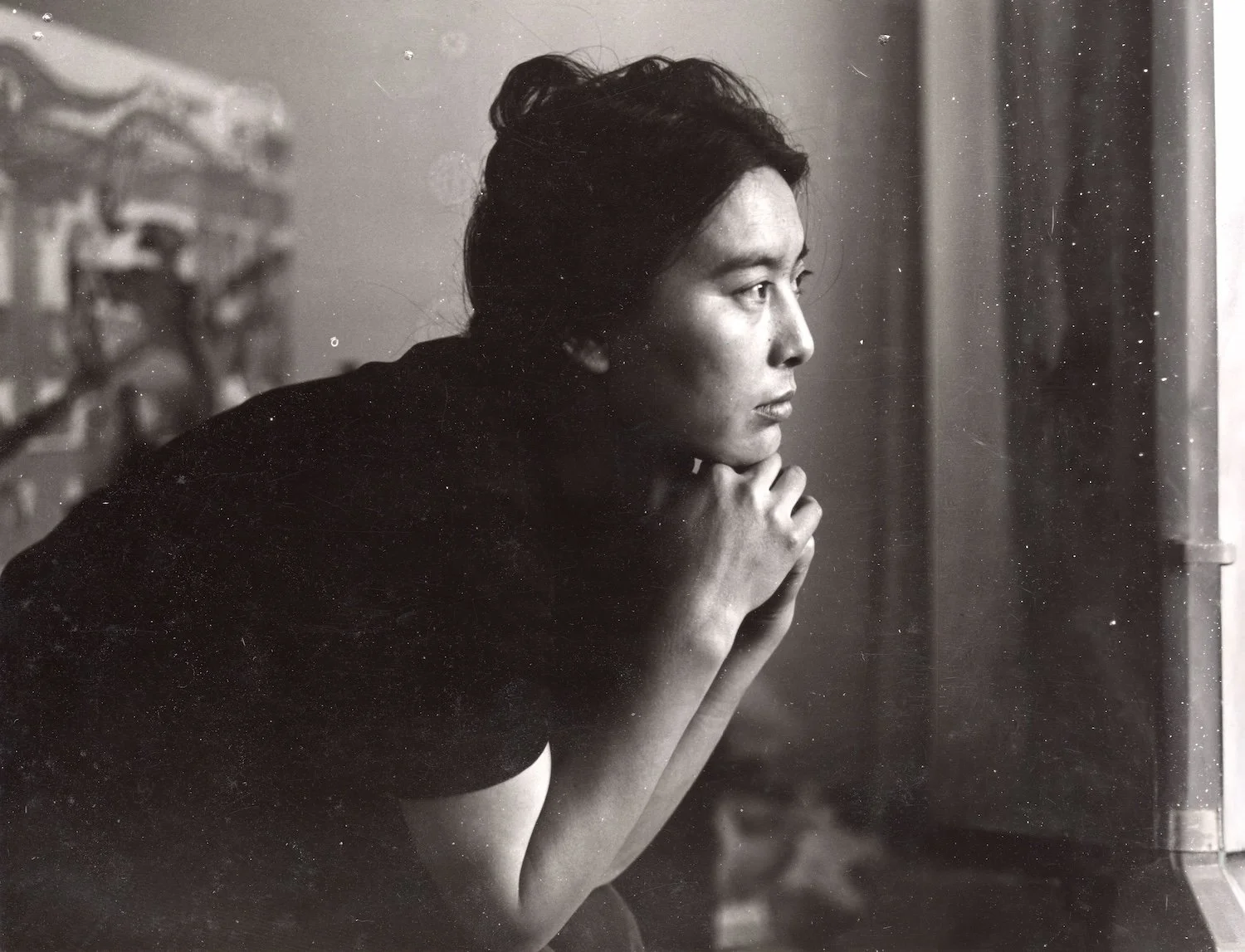
Portrait of Hung Liu, c. 1979, Courtesy of Hung Liu Estate
We have embarked on a tremendously exciting and rewarding partnership with the Hung Liu Estate as it honors and upholds the memory and legacy of the groundbreaking artist Hung Liu (1948–2021), known for her powerful paintings based primarily on historical Chinese photographs. As Office of Record, to initially aid in the transition from an artist’s living studio to a posthumous one, the relationship spans strategic planning, public engagement, scholarly media relations, public programming, assistance with photography and visual/archival assets, a new brand and visual identity, and a digital platform of the artist’s art and archives—an indexical and ever expanding resource for the public.
The identity for the estate is based on a modular stack of typography and uses a typeface with pronounced ink traps. We customized the logo with additional cuts to reference the linseed oil drips frequently found in Hung Liu’s work. The system relies on the color red, a favorite of the artist and a link to her Chinese origins, while a small drawing of a rat, hand carved in wood by the artist, celebrates her humor and reflects her lifelong affection for her identity as a rat, having been born in 1948, a Rat Year in the Chinese Zodiac.
In 2024, as an extension of the estate, we worked alongside Ryan Lee Gallery to position and promote Hung Liu: Pulse in New York, one of the first 21st century revisitings of canvases and installations Liu made in 1989 and the 1990s exploring her reactions to the 1989 Tiananmen Square massacre and crack-down and the pain of looking from afar at turmoil in her homeland. With an eye on the artist’s legacy and to contribute to the study and understanding of the artist’s work she made during this fertile and active period, we were delighted to arrange a substantial review in Art Asia Pacific—the leading English-language periodical covering contemporary art and culture from Asia, the Pacific and the Middle East—by Leah Triplett Harrington, critic, curator, and Director of the Exhibitions and Contemporary Curatorial Initiatives at the Pennsylvania Academy of Fine Art, in which she champions Liu’s “convergence of the tenets of traditional portraiture, formalism, and icons or symbols.” For additional impact, we organized with the gallery a moving public program and panel with Harrington, Ken Chen, poet, writer, and Assistant Professor and Associate Director of Creative Writing at Barnard College and former Executive Director of the Asian American Writer’s Workshop, and Dorothy Moss, Executive Director of the Hung Liu Estate and former Curator of Painting and Sculpture at the National Portrait Gallery, Smithsonian.

Georgetown University Art Galleries Spring 2025 Opening Reception, Hung Liu: Happy and Gay, January 17 – April 13, 2025, Photograph by Tony Powell
In March 2025, we launched an all new hungliu.com, a visually forward, immersive introduction of the artist for the public and a continually evolving, dynamic resource for scholars, students, and artists. The work featured on the platform has been carefully selected by Hung Liu Estate Director Dr. Dorothy Moss, former curator of painting and sculpture at the Smithsonian National Portrait Gallery, and critic and curator Jeff Kelley, the artist’s late husband and the preeminent authority on the artist’s life and work who passed away in November 2025. In order to realize the new platform, we embedded with staff and placed San Francisco Bay Area-based photography and image specialist, Michael Walker, in the studio to capture previously undigitized artwork and archival material, realizing a fresh level of visual standardization for the estate. The new hungliu.com features representative artworks from key periods in the artist’s life and career; newly digitized archival material, including self-portraits, writings, and preparatory sketches; an illustrated chronology authored by Kelley; exhibition and publication histories; an extensive selection of videos, including segments of the artist at work.
On hungliu.com, artworks from nearly every medium, spanning 1961 to her death in 2021 and organized chronologically and thematically, reflect the way the artist worked and offer a new insight for scholars and curators. Uniquely, the site has been designed with vertically scrolling pages and object records that dynamically and seamlessly unfurl, showcasing Hung’s significantly scaled and distinctive shaped canvases, like the monumental Avant-Garde (1993), which includes the artist’s source material for the oil on canvas, “a tiny photograph, black, white…really, really small…when I was in college [and] we were trained at that to be prepared and ready to fight our enemies,” as she told an interviewer.
hungliu.com by Portrait
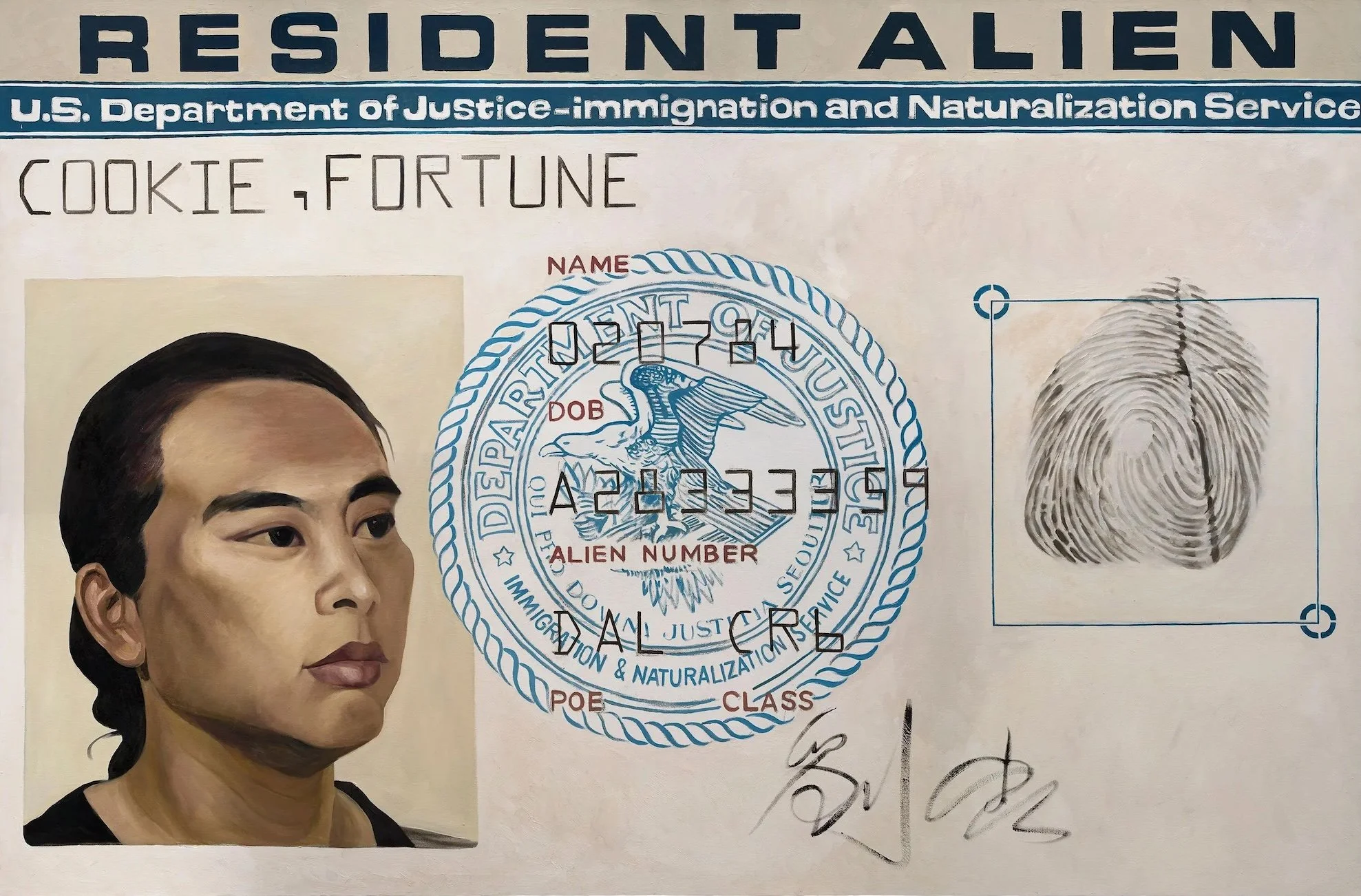
Hung Liu, Resident Alien, 1988,
oil on canvas, 60 x 90 inches (152.4 x 228.6 cm.)
Additionally, we oversee and assist with the support material tied to object records which includes an array of continually added and updated resources, such as archival papers and photographs, related artworks and exhibitions, and key moments in the artist’s life. Resident Alien (1988), for instance, the artist’s iconic conceptual self-portrait, includes: a photograph of the artist sitting in front of the canvas by legendary Bay Area fine art photographer Ben Blackwell; archival photography of the mixed-media installation Resident Alien (1988) at the downtown San Francisco Monadnock Building where her Capp Street Project artist residency culminated; additional objects in the exhibition; and an invitation into the artist’s chronology to explore the decade when as Kelley writes,
“her background in murals combined with the explosion of conceptual art she was exposed to in California resulted in immersive, multimedia presentations.”
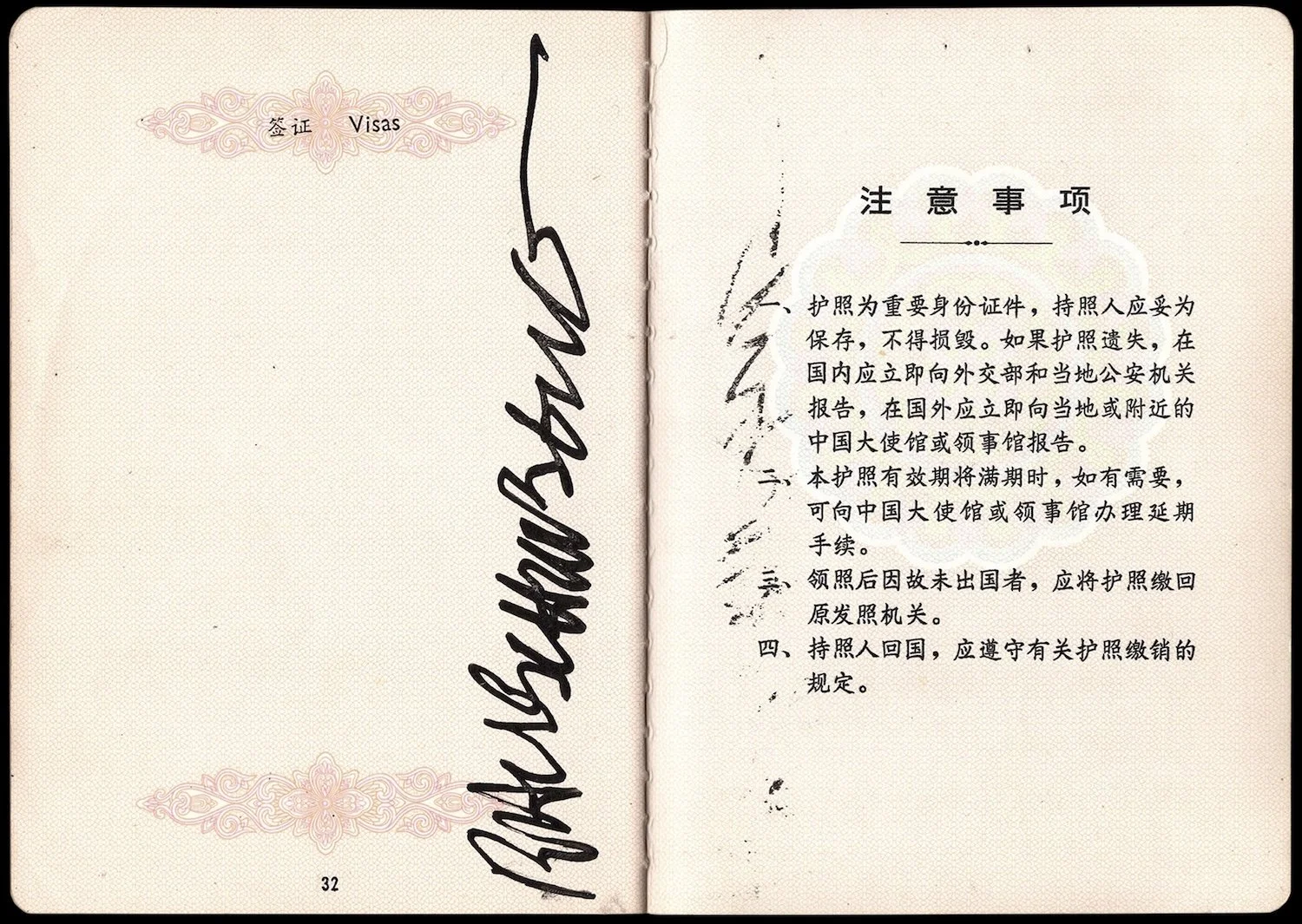
A page signed by artist Robert Rauschenberg from Hung Liu’s Passport, 1984, Ministry of Public Security, People's Republic of China
The new platform includes the ability to easily and instantly filter resources by decade and material, ranging from ephemera, such as her 1984 Chinese passport signed by Robert Rauschenberg at the Venice Biennale offering her “a passport to the art world,” to newly discovered preparatory drawings and sketchbooks, letters, writings, and abstracts for papers and presentations she delivered, as well as photographs. The site debuted with a trove of rarely seen portraits, letters, and ephemera that date to the the Maoist regime in the 1970s when Hung was sent for proletarian “reeducation” in the countryside and learned to use a camera that we recently processed, photographed, and digitized. We continually update the website with features and functionality, like the On View section, as well as news, press, and event items.
View this post on Instagram
John Stomberg, Director of the Hood Museum of Art at Dartmouth College, explores how Hung Liu reclaims a moment of Chinese cinematic propaganda in her painting We Must Ourselves Decide (2007)
View on InstagramView this post on Instagram
The San José Museum of Art remembers Hung Liu’s live performance and video, Four Cantos, (2013), on occasion of the Chinese Moon Festival
View on InstagramAnd since 2024, a refreshed @HungLiuEstate chronicles artwork and recent estate activity, including exhibitions and museum acquisitions, and features reflections from curators, artists, and friends. We oversee the channel and plan the content together with Moss with an emphasis on institutional collabs and reels for impact. For instance, to mark the anniversary of the artist’s passing, @HungLiuEstate collaborated with the @OaklandMuseumCA to produce a video celebrating her life as a beloved local artist and cultural bridge-builder with the museum’s executive director, Lori Fogarty, inside the exhibition space of the ongoing Remembering Hung Liu. #RememberingHungLiu, an ongoing series, featuring the voices of friends and artists such as Los Angeles-based Korean American artist and muralist who was a close friend of the couple and the artist’s mentee, @DaveYoungKim, shared personal memories and Liu’s generational impact on his daughter, “I found out about her passing right as I was starting work on this mural in Eureka, honoring the forgotten legacy of an entire Chinese community that was expelled from the town. I wanted to honor Hung somehow, so I made an on-the-spot modification and added one of her signature circles, dedicating the mural to her. It felt right; the work she had done her whole life was about making visible what had been erased.” Another series, #HungLiuHerStory, curated by the artist’s late widow Kelley, highlights Liu’s voice through direct quotes in both English and Chinese on the channel. Other institutional collaborations include the @ArchivesAmerArt, @ArtBridgesFoundation, Chinese for Affirmative Action (@CAASanFrancisco), @delaCruzArtGU, @HoodMuseum, National Museum of Women in the Arts (@WomenintheArts), @OaklandMuseumCA, @PhillipsCollection, @SmithArtMuseum, Dickinson College’s @TroutGallery, and @YaleBooks.
In fall 2025, we were suddenly faced with the unexpected loss of the artist’s husband, Jeff Kelley, who was an influential art critic and writer, a mentor, and dear friend to many artists. Since the artist’s death in 2021, he devoted himself fully to honoring and sustaining her legacy. We worked closely with the family, estate, and gallery of the artist to execute a multi-platform announcement of his passing as well as conceptualize a tender memorial at the Oakland Museum of California in the spring 2026.
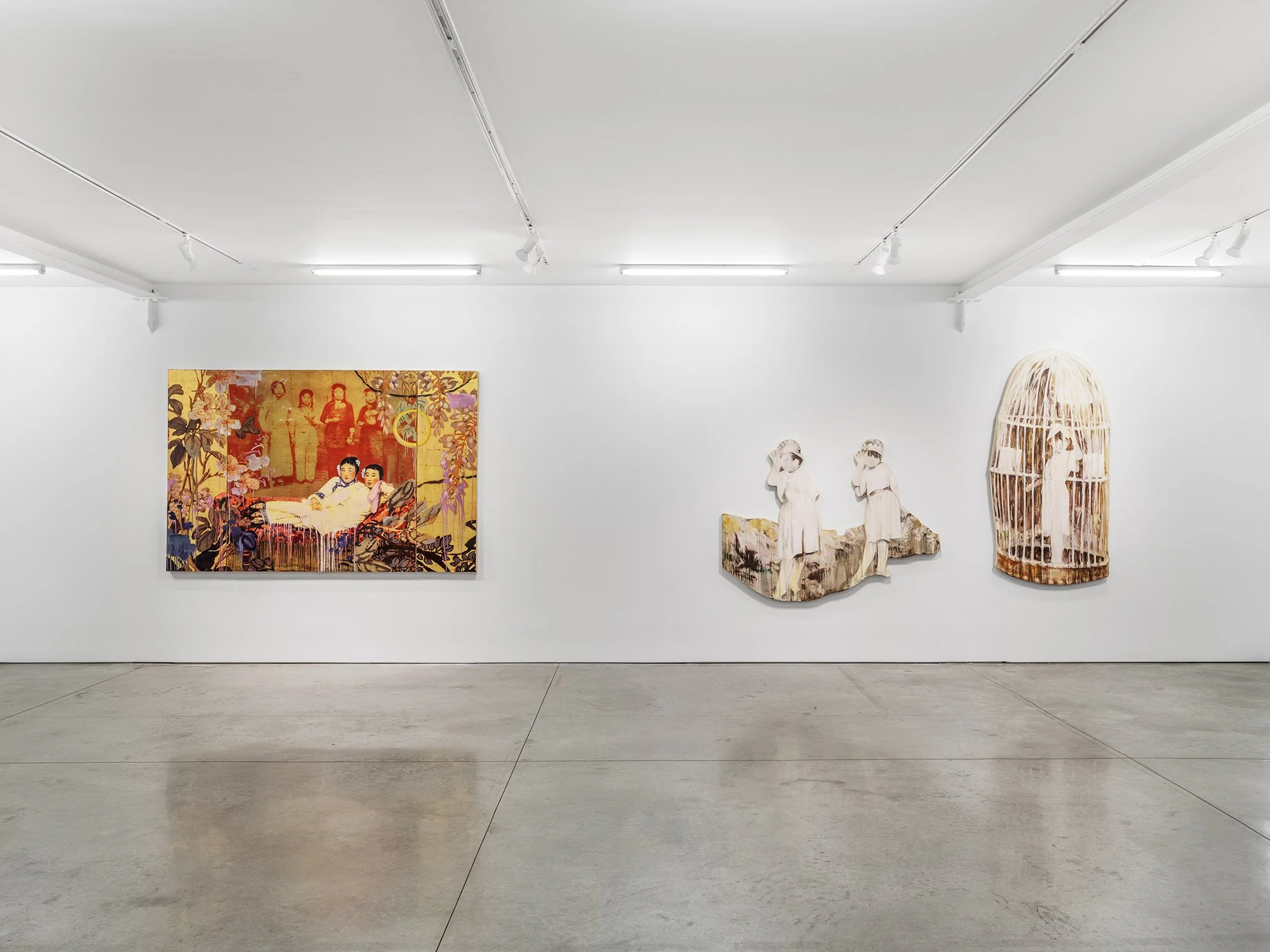
Hung Liu: Shaping, Pouring, Layering, RYAN LEE Gallery, New York. January 8 – February 21, 2026, Installation photograph courtesy of RYAN LEE Gallery
In 2026, and again as a resource and integrated partner to RYAN LEE on occasion of Hung Liu: Shaping, Pouring, Layering, the @HungLiuEstate collaborated with @RyanLeeGallery, developing a vibrant month-long series of content—spanning archivally focused posts and reels to unearth the story and source material behind the works on view and to increase engagement and awareness for the exhibition, which was specially extended to honor the artist’s birthday on February 17, with a heartwarming reel of close friends wishing Liu happy birthday, and “I hope you have many billions of years ahead of you in a beautiful universe, from my heart to you,” as artist Enrique Chagoya said.
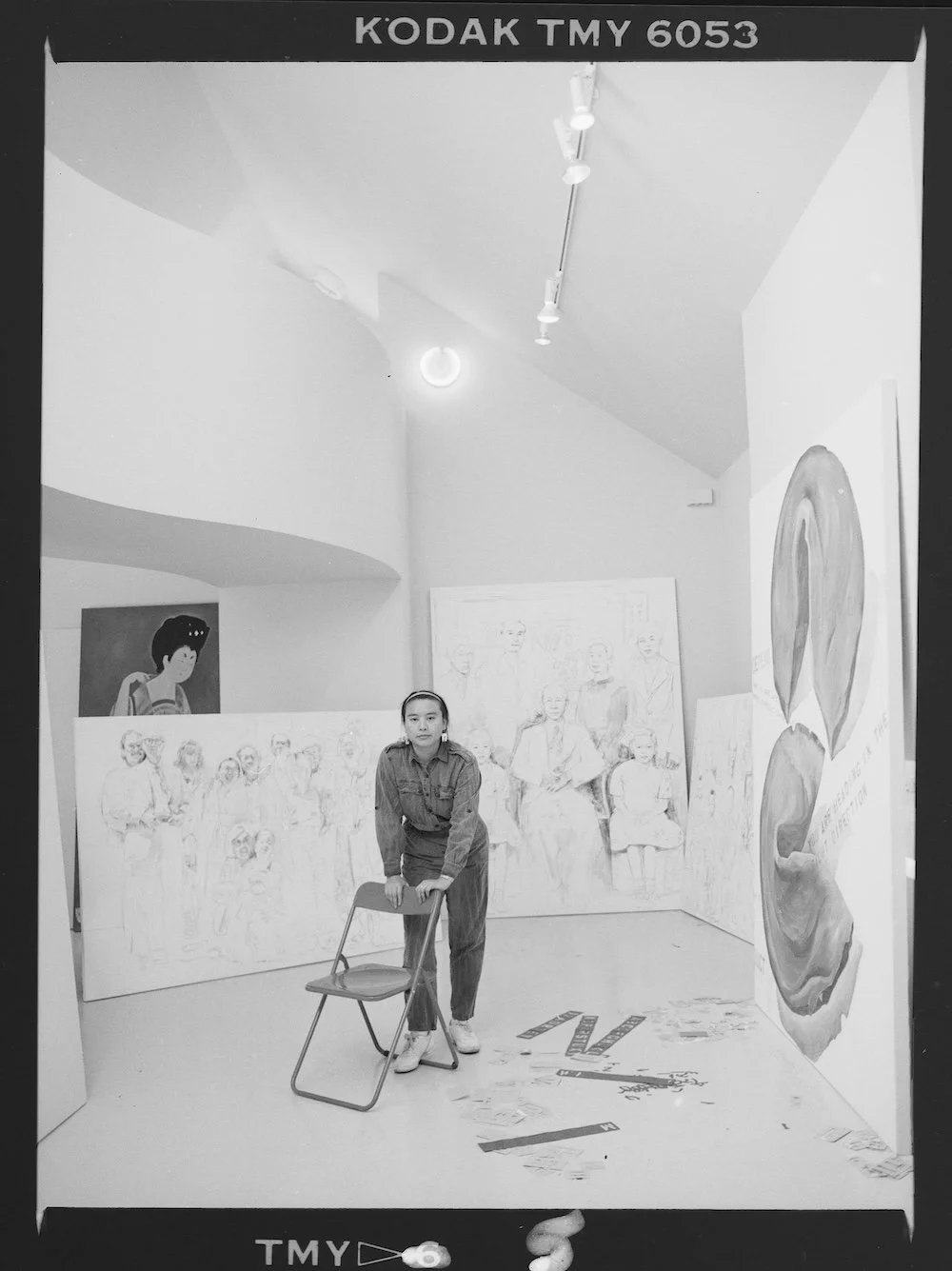
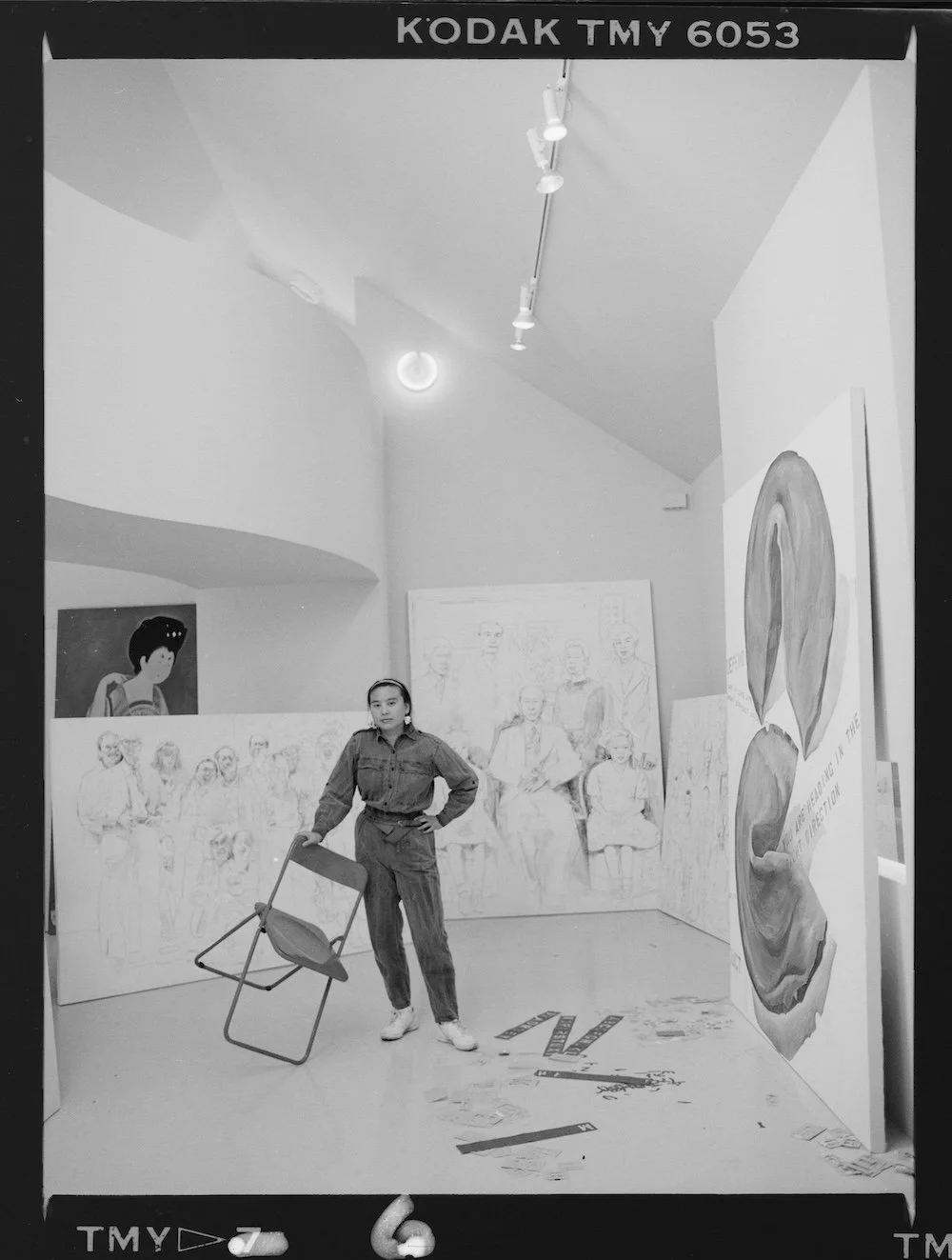
Hung Liu in the studio at an artist residency at Capp Street Project, San Francisco, CA, 1988, Photograph by Ben Blackwell, Courtesy of Hung Liu Estate
Looking ahead, we will continue to provide communications, including public relations and public engagement, and brand activities to support art, archival, and oral history initiatives and to maximize the artist in ongoing exhibitions, such as the artist’s traveling Hung Liu: Happy and Gay, originating from Georgetown University Art and Curatorial Studies graduate students in collaboration with Moss, which presents a selection of Liu’s works from 2011 to 2013 revisiting cartoons from the artist’s youth and published in children’s books and primers known as xiaorenshu. In February 2026, @HungLiuEstate spotlighted a student response to Moss’s lecture “Hung Liu: History is a Verb,” at the Bowdoin College Museum of Art on occasion of the traveling exhibition: “I think that [‘history as a verb’] is the correct way to look at history. I think it’s so easy to forget that, in fact, history is a very subjective thing that is written so often by one side, the side that’s in power…. I think it’s important to know that we’re not powerless in this. [Liu] questions the dominant history, capital-H-history…. I think the way that her work touches people across all cultures and ages is a testament to the fact that history is a verb, and we actually can do something to change it,” said Sabrina Kearney ’26. In May 2026, on occasion of AAPI Heritage Month, Abby Chen, Head of Contemporary Art at the Asian Art Museum in San Francisco, shared her illuminating insights into Hung Liu’s impact and remarkable journey, saying “When I think of Hung Liu, the three words that come to mind: fearless, kind, and tender….The most important thing for me is that you felt her gaze, you felt how she was looking. The reason Hung Liu has become the most vital cultural voices for San Francisco is because, not only just about her work, but her work gives this city a mirror to reflect on its past and its present, and where the city is heading.”
A special film of Abby Chen, Head of Contemporary Art at the Asian Art Museum, on occasion of AAPI Heritage Month
SPECIALISTS
- Strategic Planning
- Shaver Associates
- Photography
- Michael Walker
- Videography
- Video Art Productions
- Website Development
- Smith Process