
Our practice begins with careful attention.
Every artist brings a distinct history, body of work, and set of questions. We begin by understanding the work, its contexts, and the questions that matter most.
Attention is more than observation. It is the practice of looking closely enough to recognize what already exists, what remains unresolved, and what has yet to be understood.
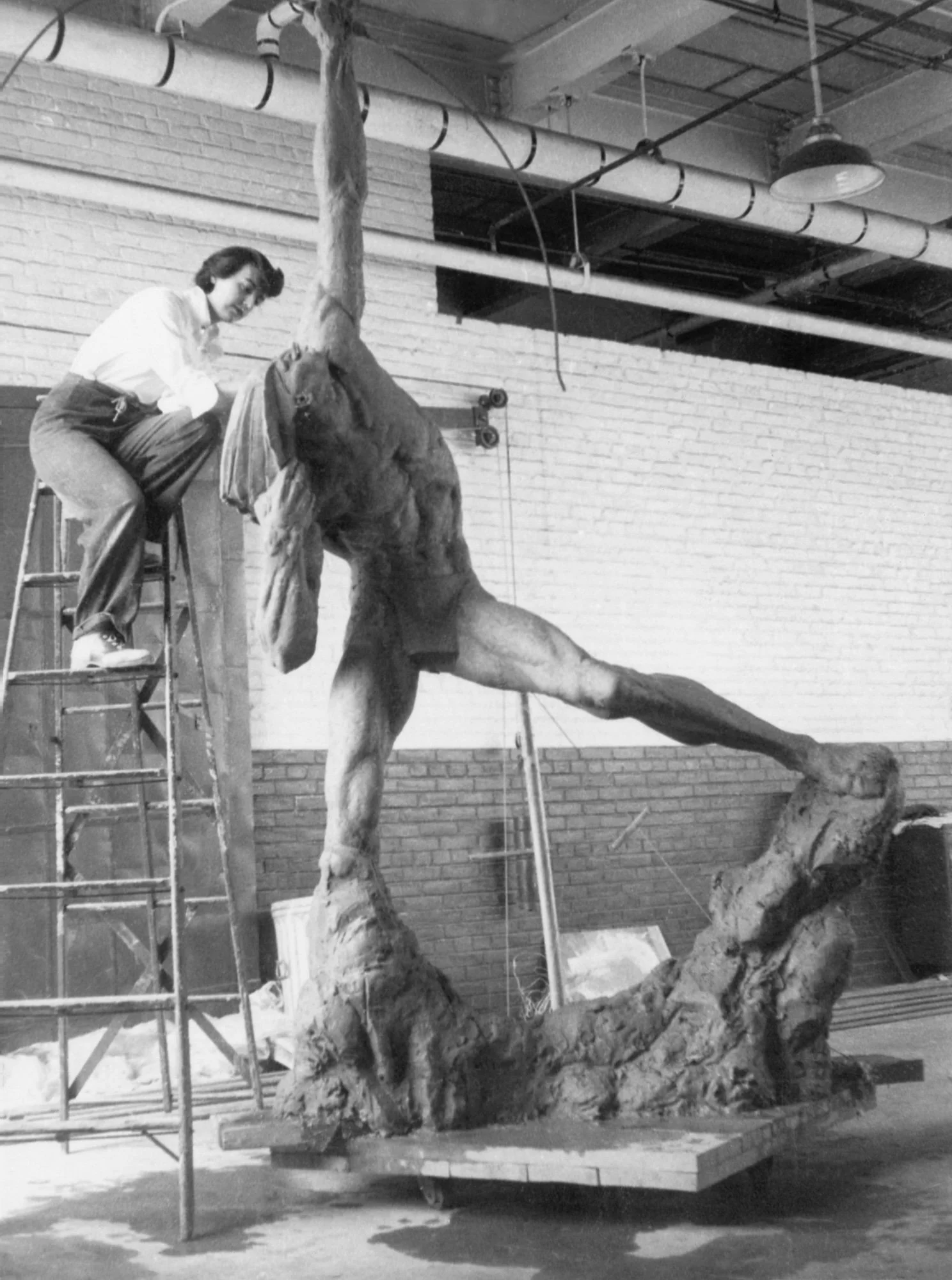
Luise Kaish at work on her first commission, Saltine Warrior, 1950, Courtesy of Kaish Family Art Project
Context & Strategy
An artist’s work is never encountered in isolation.
The historical, cultural, and institutional contexts surrounding an artist’s practice shape how it is understood. We study the work, archival materials, existing scholarship, exhibitions, and critical perception, looking not only for what is already understood, but for the relationships, overlooked aspects, and new possibilities that deserve closer attention.
From this foundation, we provide strategy and guidance that shapes the collaboration and defines its scope and scale of activity. This might mean bringing lesser-known or overlooked material into view, or reframing an artist’s most beloved work through new scholarship, curatorial practice, exhibitions, or public programming. The strategy emerges from the work itself.
Artworks, Archives & Primary Material
Collections are places where new understanding begins.
We not only organize and document archival collections, we expand and activate them. Working to museum standards, we partner with estates, foundations, museums, and other institutions to develop authoritative resources.
Drawing on our experience with catalogues raisonnés, we assist with cataloguing, fact-checking, object photography, and artwork documentation, establishing rigorous visual and editorial standards that allow collections to be studied, published, and shared. Verbally, our aim is to be exhaustive and consistent, while visually we aim to represent each artwork as faithfully as possible to the original object.
The primary material we develop contributes to new scholarship, curatorial practice, and critical appreciation. These resources may include documentation and digitization, oral histories, long-form narratives, illustrated chronologies, and original research.
Presentation & Systems
Presentation gives form to understanding.
How an artist is presented shapes the way they are encountered by the public, understood by institutions, and valued in the marketplace. We bring together visual and verbal identity, art direction, photography, cinematography, design, publications, and new platforms and channels, into a vivid public presence that reflects the depth and complexity of the artist’s life and work.
Engagement & Partnerships
The work continues in the world.
Our role extends beyond research, documentation, and presentation. We work alongside curators, scholars, registrars, archivists, communications departments, museums, galleries, and cultural institutions to help realize exhibitions, acquisitions, publications, public programs and symposia, centennials, and digital initiatives that bring scholarship, education, and storytelling to broader public audiences.
Through these partnerships, new discoveries and relationships continue to shape how artists are understood.
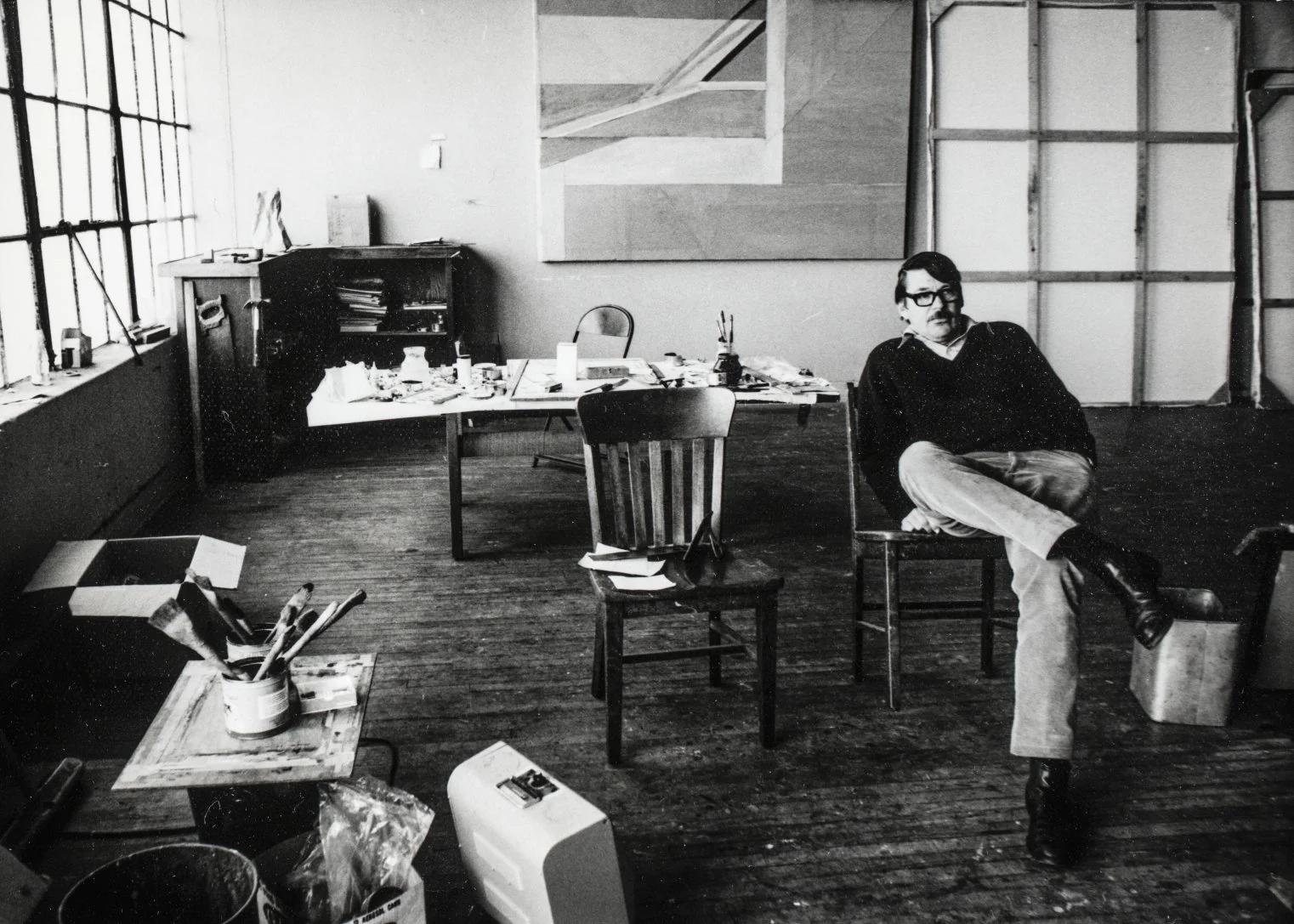
Richard Diebenkorn at his Ashland Avenue and Main Street studio, Santa Monica, CA, 1968–70 © Richard Diebenkorn Foundation
CAPABILITIES
Context & Strategy
- Research & Visual Analysis
- Advice & Guidance
- Positioning & Narrative
- Critical Writing & Scholarship
- Proofreading & Editing
- Strategic Planning
- Institutional Relations
- Strategic Communications
- Budget Planning
- Staffing & Management
Artworks, Archives &
Primary Material
- Archival Processing & Digitization
- Collections Management
- Registration
- Art Handling & Shipping
- Cataloguing & Fact-Checking
- Artwork Documentation
- Object Photography
- Oral Histories
- Chronologies
- Catalogue Raisonné Support
Presentation & Systems
- Art & Creative Direction
- Visual Identity
- Verbal Identity
- Naming
- Publications
- Exhibition Design
- Website Design & Development
- Digital Platforms
- Social Media Strategy & Content
- Motion Graphics
- Photography
- Cinematography
- Environments
- Campaigns
- Presentations
Engagement &
Partnerships
- Exhibition Strategy
- Institutional Partnerships
- Publishing Initiatives
- Public Programs & Symposia
- Centennial & Milestone Initiatives
- Digital Storytelling
- Film & Video Production