
Jay McCafferty Estate
Case Study
“
Brent and Scott have assembled a fabulous team that has exceeded my expectations. I am very pleased with the depth of talent and skill that is being devoted to Jay’s legacy.”
—Ellen McCafferty, Executive Director, Jay McCafferty Estate
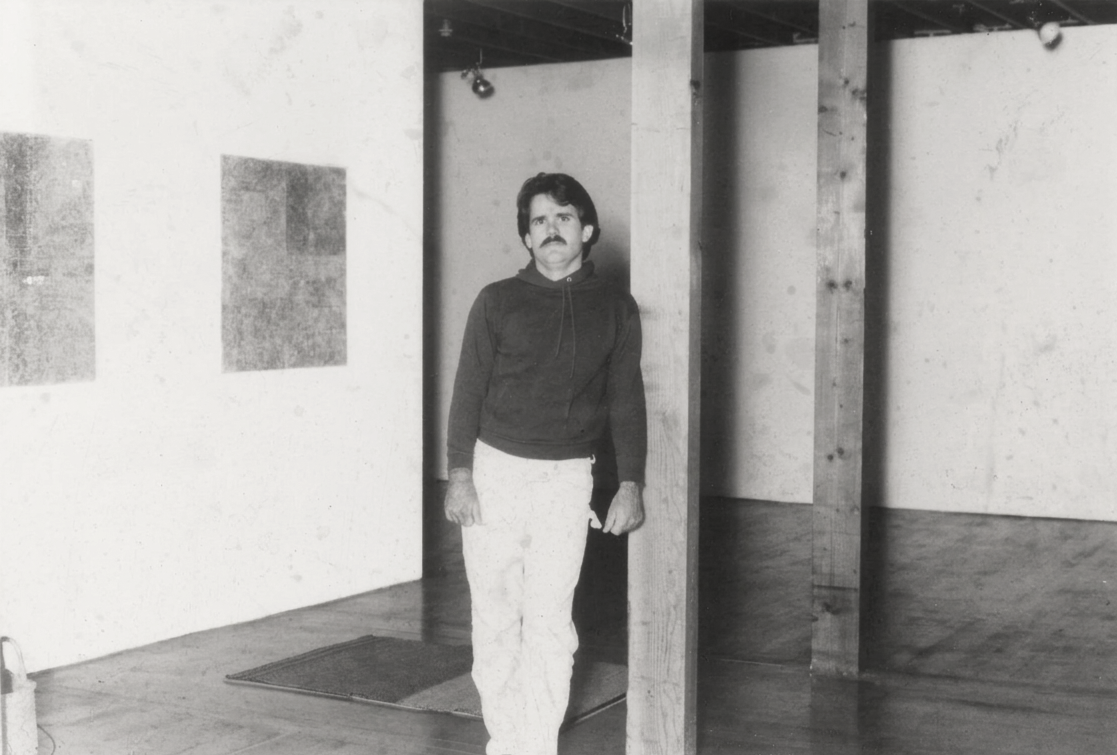
Jay McCafferty in his studio in San Pedro (Los Angeles, CA), 1975 © Jay McCafferty Estate
As Office of Record, we partner closely with Ellen McCafferty, widow of the artist, and her extended family to cultivate a wider and deeper awareness of Jay McCafferty (1948–2021), whose work explored time and process through a practice grounded on the Southern California sun. In the early 1970s, he developed his signature solar burn paintings created by concentrating sunlight with a lens, a technique that was at once meditative and performative. His adventurous oeuvre includes paintings, photographs, prints, and a small but significant body of pioneering video works. The paintings range from gridded, skeletal, earthen, and metallic works in the 1970s, to glowing, buoyant abstractions by the 1990s, to large surface excavations created by burning away portions of paper or cardboard in the 2000s.
At Portrait, we provide strategy, marketplace and museum relations, brand, design, and integrated communications, including digital and social, and oversee a variety of specialized tasks and activities.
A fully integrated scope of work to resurface, recontextualize, and significantly elevate the artist includes the creation of a specialized team: Shaver Associates, to assist with short- and long-range strategic planning; archivist Sonia Campagnola, a native of Milan who formerly worked for Flash Art in Milan and Los Angeles, to inventory the estate’s collection, process and digitize McCafferty’s archives, and research and report the artist’s first comprehensive prose chronology; and photographer Jeff McLane, to photograph key works, as well as the artist’s former studio and tools in San Pedro.
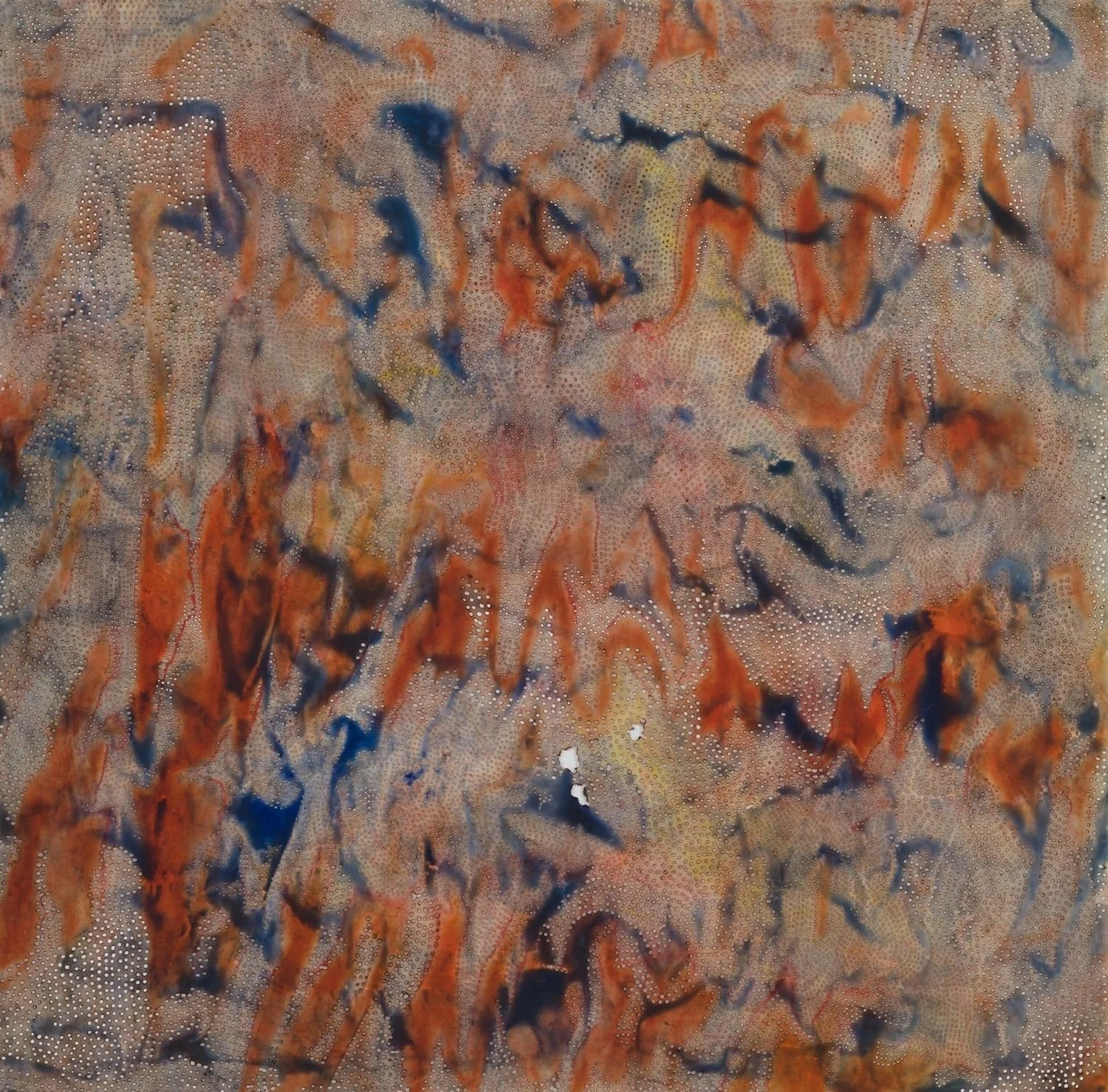
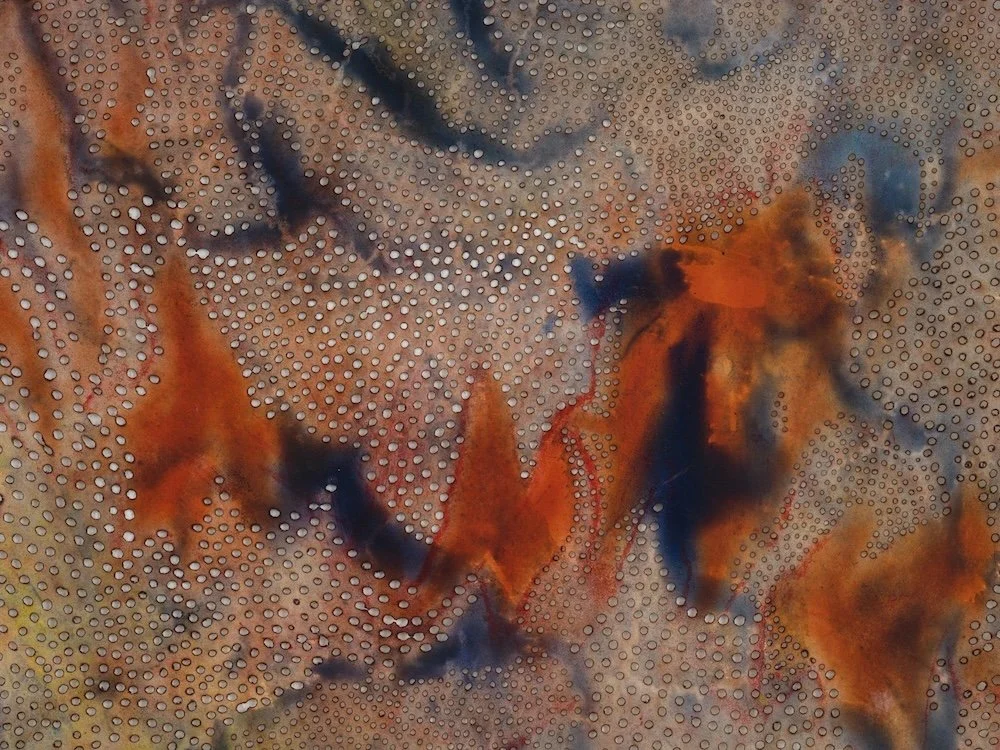
Above: Jay McCafferty, #9, 2019, solar burn on pigmented paper, 36 x 36 inches, Photograph by Jeff McLane. Bottom: detail © Jay McCafferty Estate
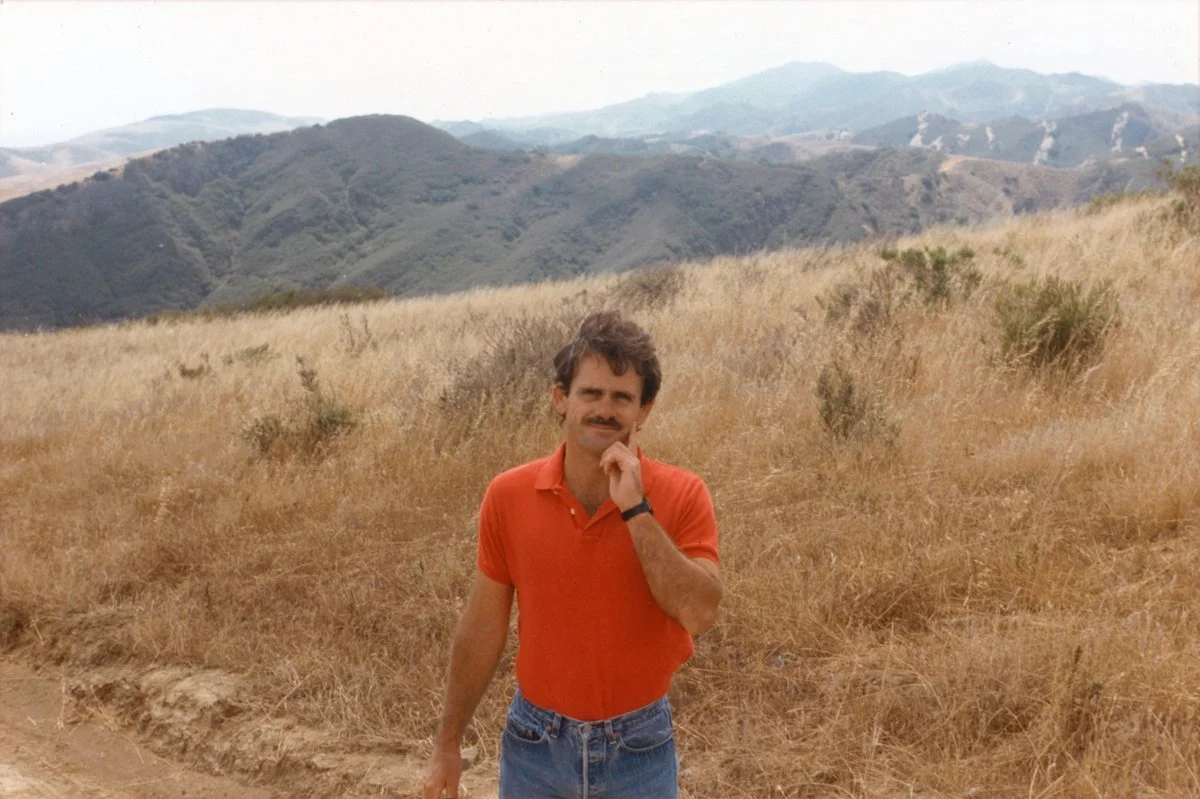
Jay McCafferty in Hollister Ranch, Santa Barbara County, CA, 1986 © Jay McCafferty Estate
In order to support the family’s desire to reengage with the marketplace and museums, we embarked on an ongoing effort to freshly situate his practice within the context of Post-Minimalism, Performance, and Process Art of the second half of the 20th century in Southern California.
Alongside research, reporting, and visual analysis with Campagnola, and the cataloguing of the late artist’s papers—including ephemera, personal photography, and sketchbooks—we began an intimate and rewarding journey with the family of the artist to craft a subtle and affecting estate brand and visual identity system. The identity features a radiating glow that corresponds to the cursor on the website invoking the artist’s use of sunlight and a sturdy, minimalist, quiet typography that relates to the artist’s connection to the natural world, surfing, and lifeguarding. This activity was complemented by a series of revelatory photography shoots with McLane, resulting in new, full-color editorial quality imagery that helped convey the significance of the work for contemporary audiences.
In anticipation of an all-new, indexical website dedicated to the artist’s art and life, we developed a suite of parallel materials to support the engagement with galleries, collectors, museums, institutions, such as a career-spanning, full-color, edge-to-edge downloadable dossier.
With Campagnola, we completed a visually illustrated prose chronology written in a syntax and language exclusive to the estate, as well as an exhaustively researched CV. The Chronology reveals a number of significant moments in McCafferty’s studio practice and career, paving the way for newly interested art historians, curators, and students. For example, Campagnola examines the artist’s first solo show with gallery, publisher, and workshop Cirrus Gallery & Cirrus Editions Ltd. in 1975. The exhibition marked, as she writes, “the public debut of a series that would come to define his career, with numerous subsequent exhibitions adopting the same title.” She also uncovered the earliest instance of a parallel drawn between McCafferty and Agnes Martin (1912–2004), an artist he deeply admired, in a text from 1975 by fellow artist Andrea Joki. Campagnola also explores the year 1986, pictured here, when “McCafferty and Ellen’s embrace of the outdoor lifestyle leads them to purchase land in Santa Barbara County, California, where they build their second home and studio.”
jaymccaffertyestate.com by Portrait
In anticipation of an all-new, indexical website dedicated to the artist’s art and life, we developed a suite of parallel materials to support the engagement with galleries, collectors, museums, institutions, such as a career-spanning, full-color, edge-to-edge downloadable dossier.
With Campagnola, we completed a visually illustrated prose chronology written in a syntax and language exclusive to the estate, as well as an exhaustively researched CV. The Chronology reveals a number of significant moments in McCafferty’s studio practice and career, paving the way for newly interested art historians, curators, and students. For example, Campagnola examines the artist’s first solo show with gallery, publisher, and workshop Cirrus Gallery & Cirrus Editions Ltd. in 1975. The exhibition marked, as she writes, “the public debut of a series that would come to define his career, with numerous subsequent exhibitions adopting the same title.” She also uncovered the earliest instance of a parallel drawn between McCafferty and Agnes Martin (1912–2004), an artist he deeply admired, in a text from 1975 by fellow artist Andrea Joki. Campagnola also explores the year 1986, pictured here, when
“McCafferty and Ellen’s embrace of the outdoor lifestyle leads them to purchase land in Santa Barbara County, California, where they build their second home and studio.”
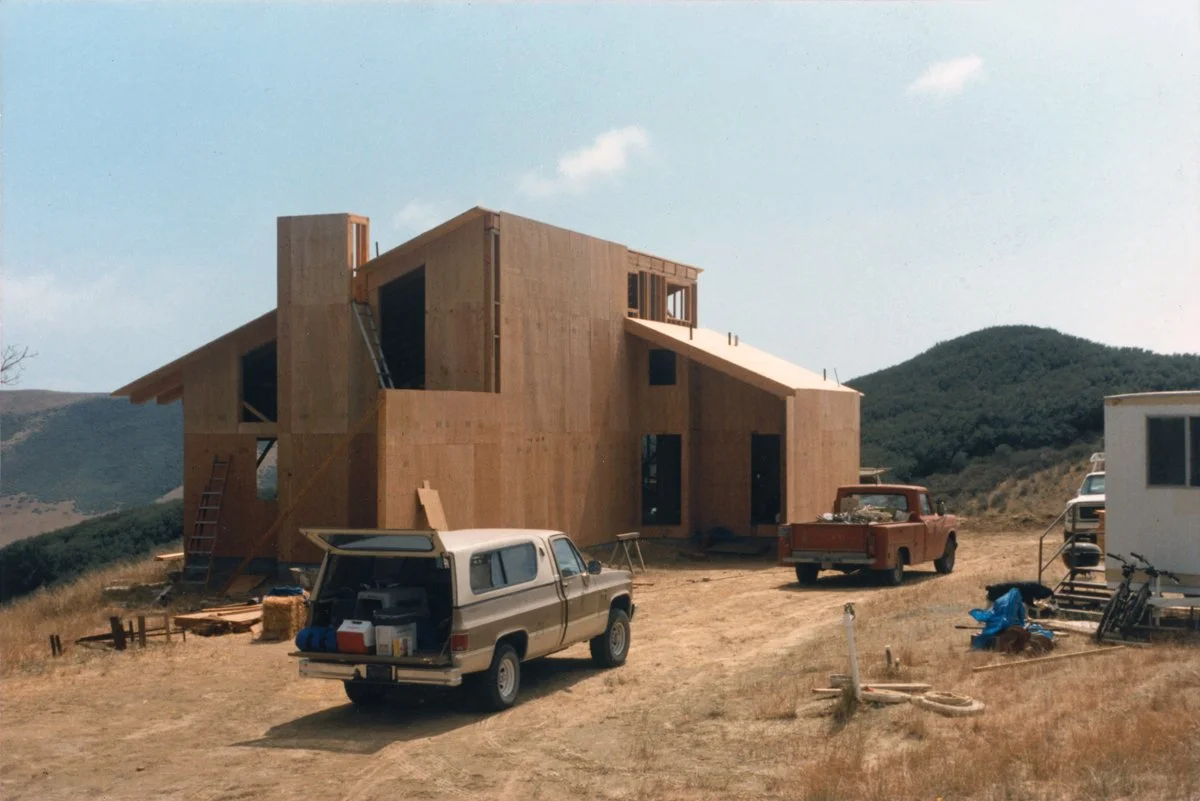
Exterior of Hollister Ranch house during construction, ca. 1987 © Jay McCafferty Estate
In April 2026, we debuted an all new platform, rich in visual material, including new photography of the artist’s artwork in every medium and from every period, and newly digitized archival material, that is now indexed and searchable, alongside expansive verbal material, including a special Artist page featuring a sweeping, downloadable Chronology and CV, and a new quarterly series, In Focus, researched and written by Campagnola and Brent Foster Jones. To add depth and completeness, the website includes selections of the artist’s video works, shared with the estate by the Getty Research Institute in Los Angeles that holds McCafferty’s complete video archive.
The inaugural essay of the In Focus series, titled “Confronting It,” looks at the year 1981, when the artist began creating “controlled burn marks on paper that revealed halos of intense, glowing hues” and when he challenged himself to work on an unprecedented scale—a brightly colored, epically scaled site-specific solar burn triptych installed at the Los Angeles County Museum of Art (LACMA). “Highly regarded in the Los Angeles art scene, having won the LACMA New Talent Award in 1974 and fresh off a dazzling Artforum review, in 1981 McCafferty was invited by newly hired Curator of Modern Art Stephanie Barron to participate in the exhibition The Museum as Site: Sixteen Projects,” the essay notes. And continues, “In response to the museum architecture’s striking New Formalist rows of concrete columns, McCafferty burned, painted, and patched canvas in monumental dimensions, producing Between, a site-specific work consisting of three, vertical banners. Each banner measured fifty-two feet high and eight feet wide and was suspended in alternate bays, cascading from the roof of the east façade of the now demolished Ahmanson Gallery.” In the essay, they clarify that “from the outset, fire was not simply a tool but a primary medium” for the artist. “Initially he mostly burned paper—sometimes pigmented, sometimes plain, following a grid or freely guided by instinct. Over time though, he extended this practice to other materials, including wood and cardboard, testing how the burns would behave across different surfaces and densities.”
The platform has been launched alongside a new educational channel on Instagram, @JayMcCaffertyEstate, which shares the artist’s textured, tactile works together with archival material to reveal an artist who, on the cutting edge of the experimentation taking place in Southern California in the latter part of the 20th century, pushed his practice to its limits. As of this writing, we are supporting the estate to renew critical appreciation of the artist’s work, identify legal and dealer representation, and to collaborate with institutions that hold work made by the artist, such as the Getty, the Los Angeles County Museum of Art, and the Museum of Modern Art in New York.
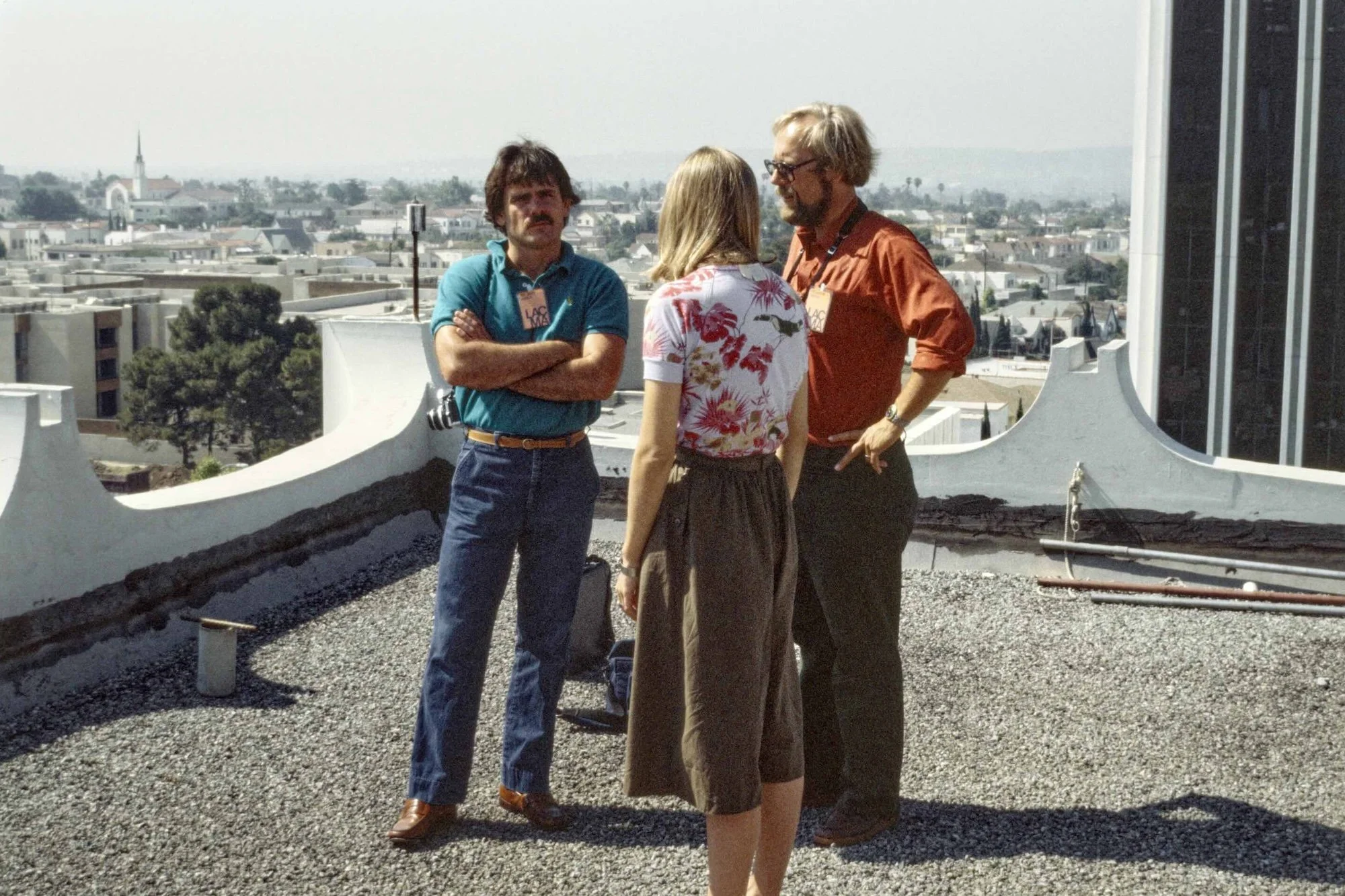
Jay McCafferty, Installation of three paintings, 26 and 29 June 1981, for the exhibition “The Museum as Site: Sixteen Projects,” Ahmanson Gallery at Los Angeles County Museum of Art, Getty Research Institute, Los Angeles
SPECIALISTS
- Archives, Research and Chronology
- Sonia Campagnola
- Editorial
- Sonia Campagnola
- Photography
- Jeff McLane
- Website Development
- Caroline Bushman
- Strategic Planning
- Shaver Associates