
Kaish Family Art Project
Case Study
“
“It was a cold New Hampshire summer and I was stoking the fireplace in the studio. In angst I threw some of my canvases in the fire. As edges charred the works aroused interest. That was the beginning of the series of the works I call my burntworks. I did a series of collages. Using primarily earth colors and materials and layering them...burning, cutting, pasting, ripping and tearing.”
—Luise Kaish on her 1976 residency at MacDowell Colony
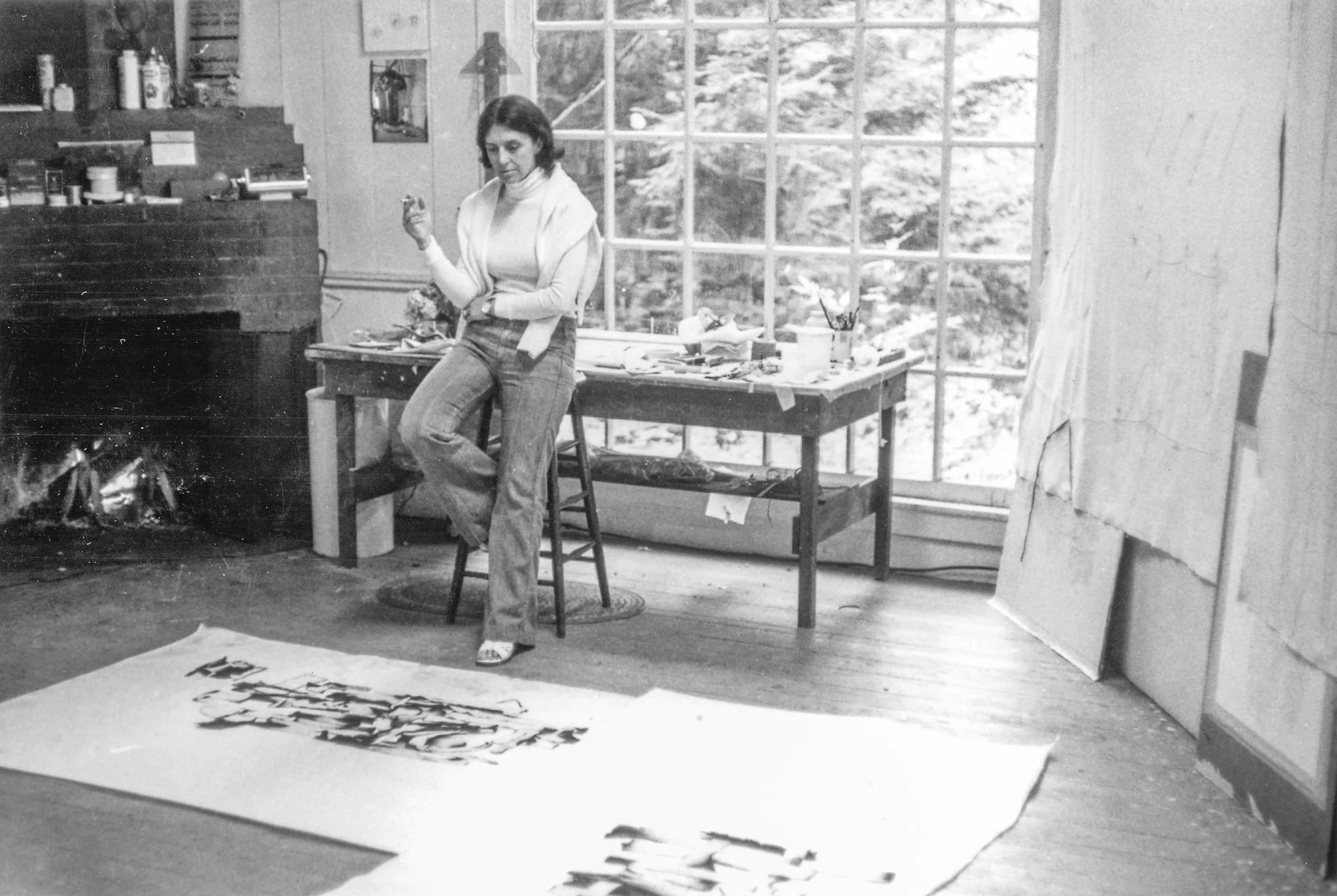
Luise Kaish in the Cheney studio, MacDowell Colony, New Hampshire, 1976, Courtesy of Kaish Family Art Project, New York
On occasion of the centenary year of Luise Kaish (1925–2013), a trailblazing New York City sculptor who pioneered monumental sculptures in bronze, aluminum, and stainless steel in the 1950s, 1960s, and 1970s, we embarked on a partnership to plan and execute a centennial celebration with a centerpiece jewel-box exhibition in Manhattan, curated by Susan Fisher who oversees the artist's legacy and formerly served as Director of Collections and Curatorial Affairs at the Brooklyn Museum, advising her and the family of the artist on strategy; narrative; communications, including media relations, social, and videography; and public engagement, including public programming, including private and public programming, exhibition/installation design, and assistance with the accompanying exhibition catalogue.
Beginning in the late spring of 2025, we began providing integrated advice, guidance, and assistance for Luise Kaish: Fire on the Mountain, a special, limited run presentation of a lesser known, lesser studied aspect of her oeuvre—a body of never shown, never exhibited work made in 1976 at MacDowell, the legendary artist colony and residency in New Hampshire, using fire. We helped to refine the checklist and we suggested archival vitrines with related materials for display. We were also delighted to recommend and commission curator, writer, and art historian Glenn Adamson who contributed an essay—alongside Fisher’s sweeping and historical “Painting with Fire: Luise Kaish at MacDowell”—that expands and complicates her legacy, setting Kaish “alongside other women artists of the time who embraced fire as a creative medium, among them Ana Mendieta, who famously used flame to inscribe her own silhouette into the earth” and Judy Chicago whose Atmospheres — a series of performances involving fireworks, flares, and pigmented smoke.”
In advance of the opening, we successfully arranged the first major editorial placement on the artist in over thirty years since 1988, when New York City art critic Gerrit Henry wrote about Kaish for Arts, “At New York’s MacDowell, the Fiery Epiphanies of Artist Luise Kaish Unfurl,” by Grace Edquist in Vogue—an exclusive ahead of the sublime presentation and breakthrough piece on the artist. “Kaish,” Edquist writes, “had a deep connection to spirituality, particularly Jewish mysticism and cites art historian Norman L. Kleeblatt, who remarks that ‘relevant to the physical fabrication and psychological foundations of Kaish’s Burntworks is the kabbalistic notion of the breaking of the vessels and the related concept of tikkun, or healing the world.’ Is it possible that in layering strips of charred material, Kaish was trying to heal something? I think of Monadnock I, one of her first Burntworks created at MacDowell, in which large rectangular patches of raw canvas are layered on top, almost like a bandage applied to stem the bleeding. By using the destructive force of flame, and balancing the scorched bits with pristine counterparts, she made the case for harmony between light and dark. In 1981 she showed a selection of them at Staempfli gallery. For the exhibition’s catalogue, she wrote: ‘…I like to think of these landscape collages as brief poems, as worlds in themselves, where through the very smallness of a window, we can glimpse the stars of the universe.’”
In anticipation of the exclusive, which we helped to schedule and synchronize down to the hour, we worked closely with Fisher and the artist’s daughter Melissa Kaish to organize a special afternoon for Edquist to view the artwork in the artist’s former home and studio. And, we worked closely with the MacDowell Chief Advancement Officer, Communications Officer/Social Media & Editorial Content, and Creative Director to share the exclusive across social channels @MacDowell1907 and @KaishFamilyArtProject, here.
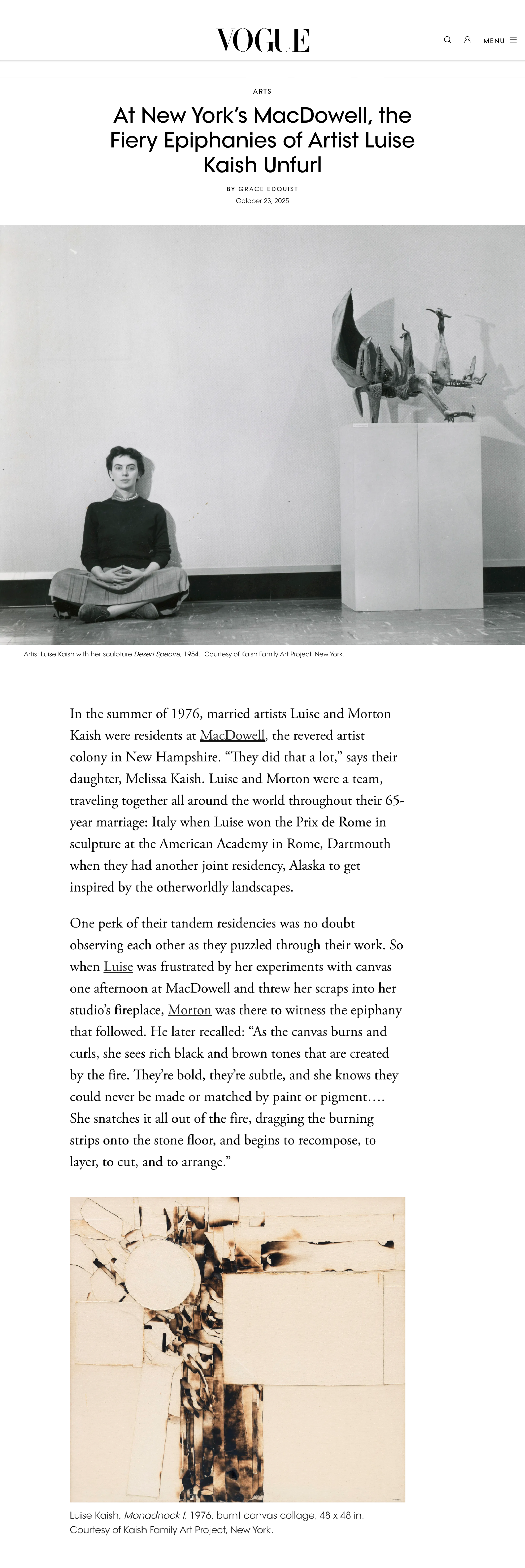
An exclusive in Vogue by Grace Edquist
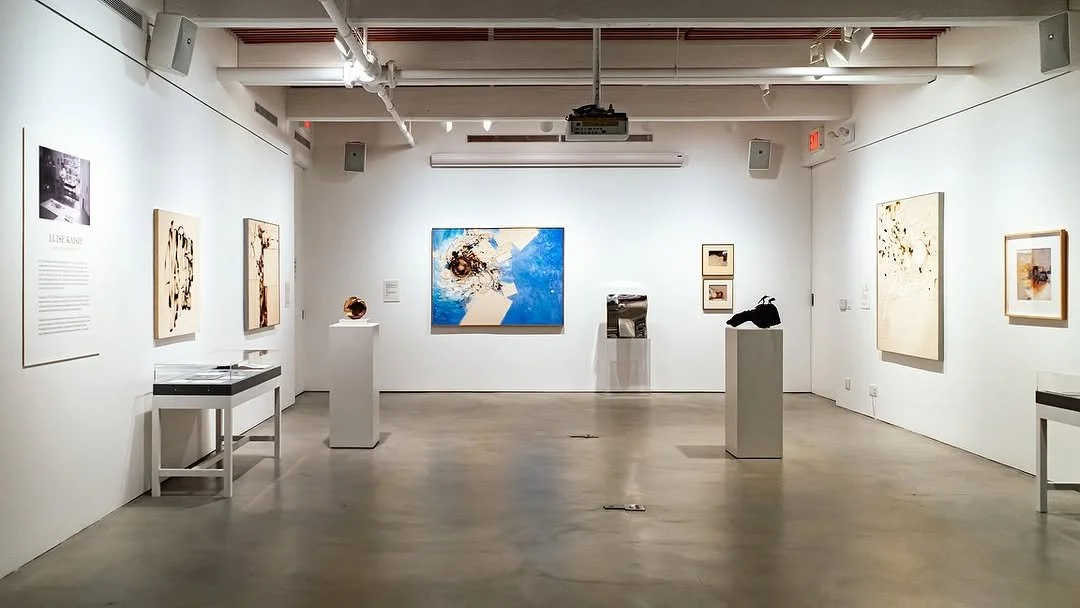
Luise Kaish: Fire on the Mountain, October 28 – November 7, 2025, MacDowell NYC
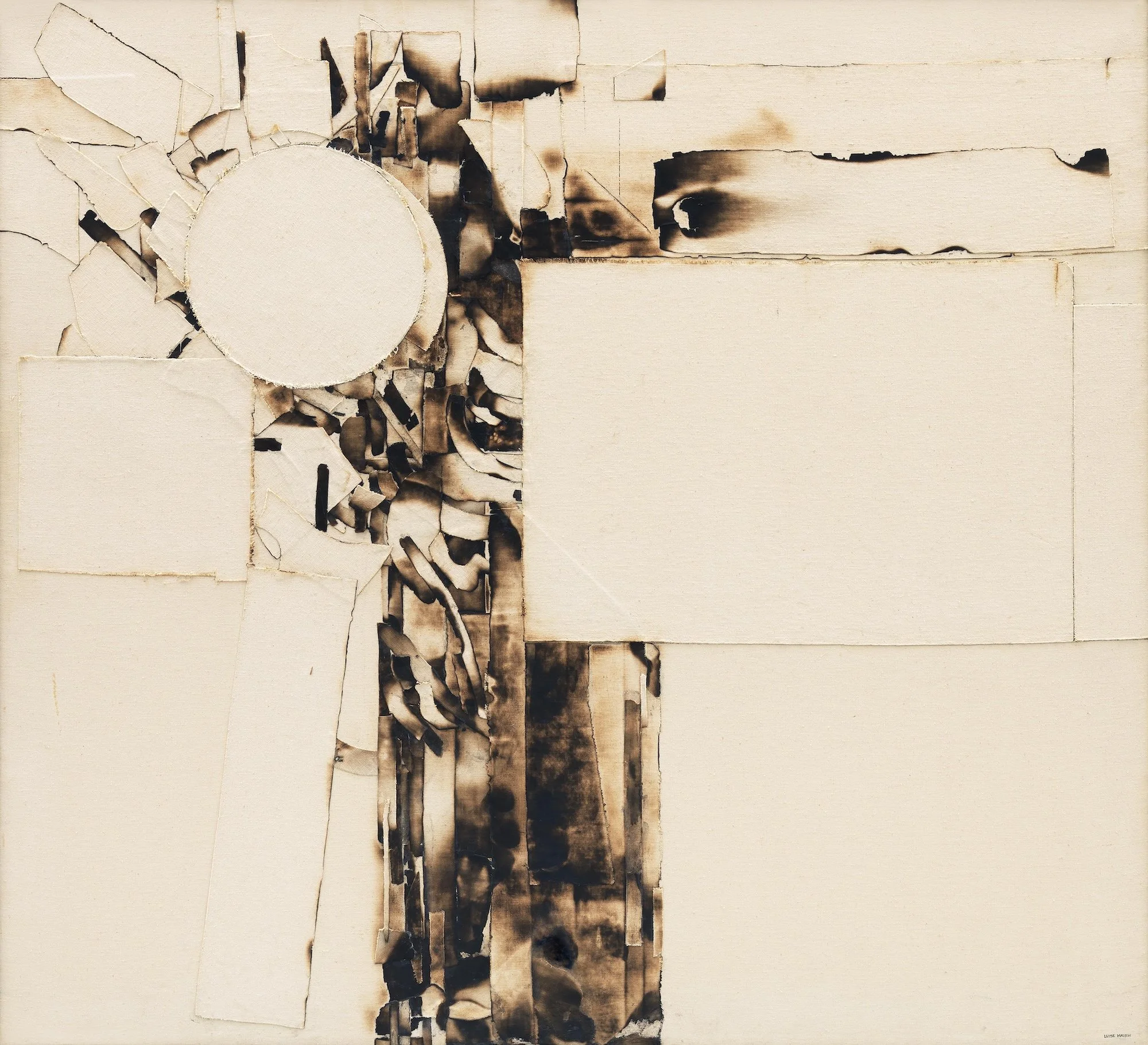
Monadnock I, 1976, burnt canvas collage, 48 × 48 inches, Courtesy Kaish Family Art Project
Across the exhibition, we served as a thought partner, assisting across disciplines and departments from sourcing art handlers and lighting professionals to building a robust guest list of art historians, curators, artist-endowed foundation and estate peers, and esteemed critics and writers to scripting and designing a public program for the opening reception, featuring a special conversation between Adamson and Fisher. “What Kaish experienced as a serendipitous moment,” as Fisher writes in a second essay in the accompanying catalogue, was “the emergence of a new and invigorating artistic language from what was initially an act of destruction.” During the conversation, Adamson and Fisher walked from work to work in the striking, sublime presentation of the charred, ashen collages that were “arguably her most powerful body of work,” as Fisher asserts, discussing works individually such as the riveting, vertical four foot tall burnt canvas collages Monadnock I, 1976, of which Fisher remarked, “a rounded form enters as a force of light and energy, its radiance generated by the dense layering of burnt fragments,” and the vivid, tactile five foot tall Creation, 1977. The show also included examples of work in the series that she continued to explore for nearly a decade and that include bright explosive bursts against raw canvas, such as Storm 1, 1989 and Aspen, 1981, which Adamson says includes “a passage of sublime painterly intensity, like something out of a late J. M. W. Turner seascape.”
In support of media relations and public engagement, we worked closely with the Communications Officer/Social Media & Editorial Content and the Creative Director to produce an exclusive @MacDowell1907 and @KaishFamilyArtProject Instagram Reel, interviewing Fisher in the exhibition space and debuting the reel in advance of the special conversation between Adamson and Fisher on Thursday, October 30. And, we were additive to the estate’s ongoing engagement with the commercial marketplace. We arranged for a series of special visits throughout the duration of the MacDowell exhibition, which was extended an extra week at our encouragement, to allow dealers and galleries a further opportunity to see work by the unrepresented artist.
In order to encourage a renewal of interest in the sculptor, we suggested the estate continue to reintroduce Kaish to an ever widening audience via a multi-year—2025, 2026, 2027—arc of exhibitions, installations, and public programs. And we provided advice, guidance, and assistance to develop a series of centennial activities and programing, maximizing where the artist is institutionally collected. In addition to the MacDowell presentation, we encouraged the estate to promote a rotating, polished aluminum sculpture, Sphere (1976) that went on view at the Hood Museum of Art at Dartmouth University (Kaish was an artist in residence in 1974) in honor of the institution’s 40th anniversary; and a bronze maquette for her major 1972 sculpture commission, The Wall of Martyrs, on view at Indiana University, and was subsequently gifted to the institution. And in 2026, in partnership with Panopticon, the estate launched the ambitious undertaking of a catalogue raisonné of Luise Kaish’s sculptures—an important legacy project that will shine new light on the depth and range in her work and preserve her lasting impact for future generations. Taken together, the combination of advice, guidance, and programming execution created significant new visibility for Luise Kaish and was additive to the estate securing a 2027 solo exhibition, Luise Kaish: Celestial Objects, at the Hood Museum as the culmination of the artist’s centennial celebration.
Susan Fisher, Director of the Kaish Family Art Project, reflects on Luise Kaish’s Burntworks and her 1976 MacDowell residency
View on Instagram
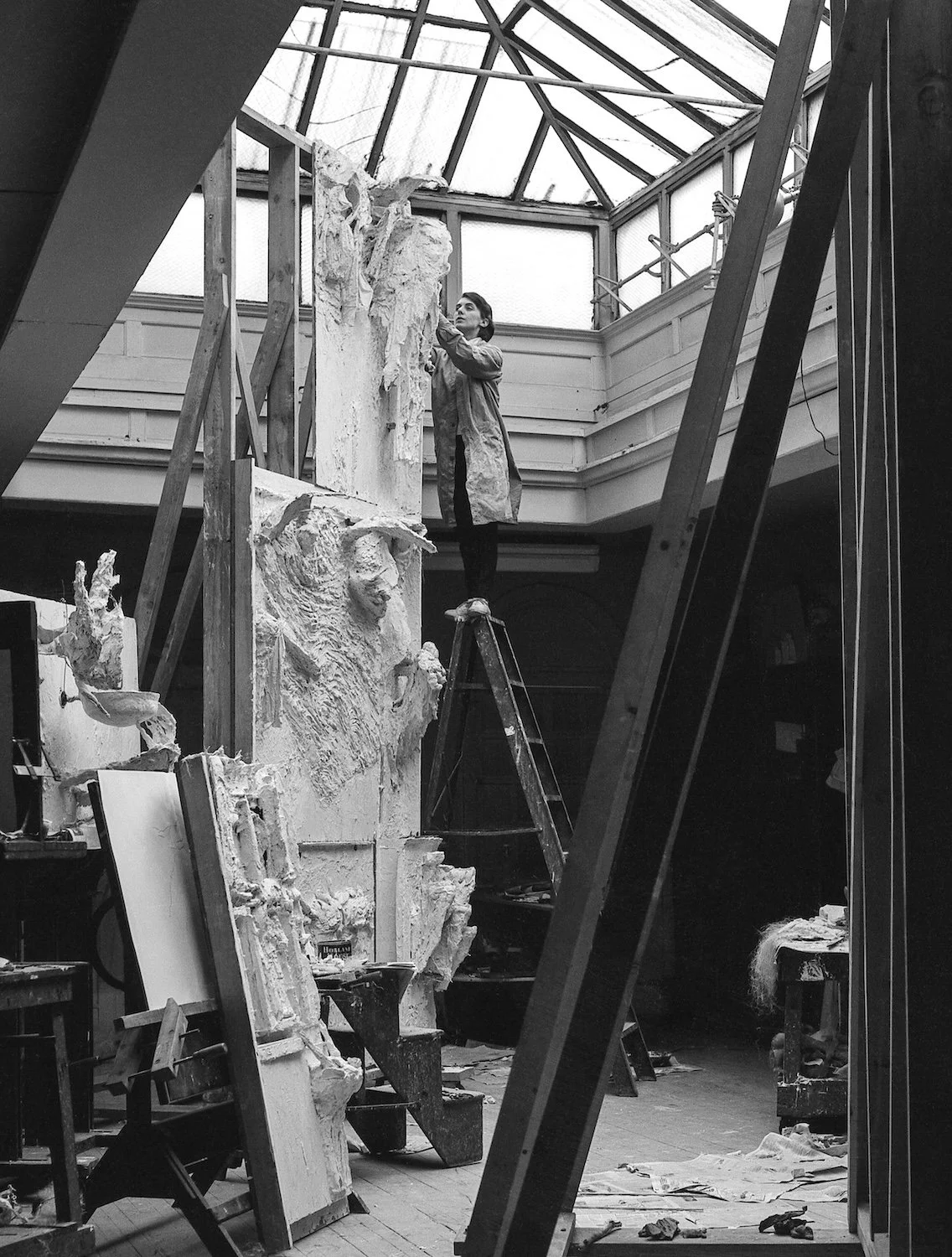
Luise Kaish at work on The Ark of Revelation in her studio on MacDougal Street, New York, NY, c. 1962, Courtesy of Kaish Family Art Project
SPECIALISTS
- Scholarship
- Glenn Adamson