
In 2021, we began providing strategy and communications advice with a special focus on positioning, narrative, media relations, and public programming to The Mary Ann Unger Estate, founded to further the understanding and appreciation of the pioneering and unabashed feminist sculptor (1945–1998). Unger came of age in the 1970s downtown New York art scene and is remembered not only for her monumental sculpture but for platforming other women artists and artists of color in the 1970s, 80s, and 90s while working through years of illness.
Mary Ann Unger Estate
Case Study
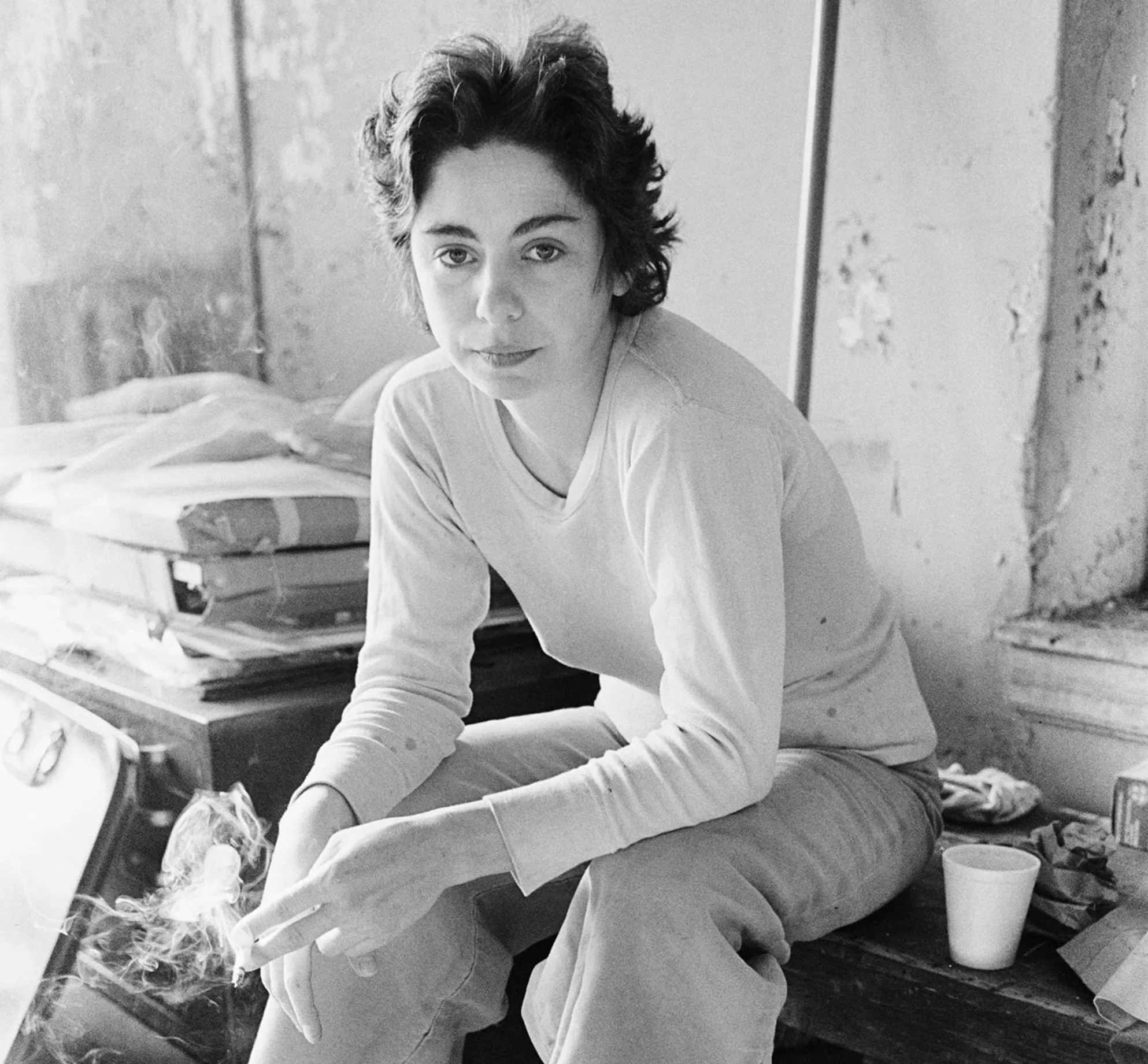
Mary Ann Unger at her East Village Loft, New York, NY, 1975, Photograph by Geoffrey Biddle
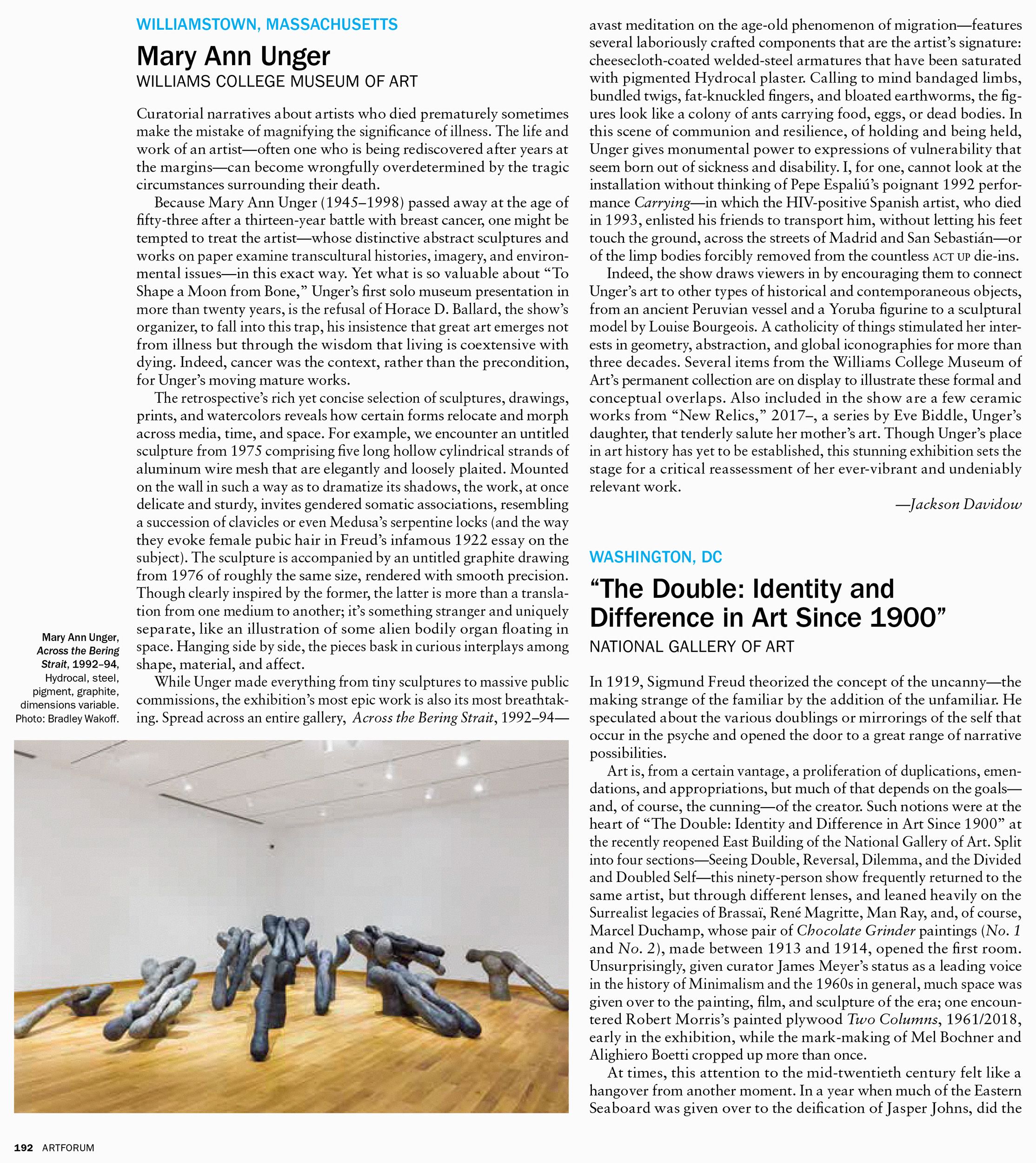
On the occasion of a first full-scale museum retrospective organized by American art curator Horace Ballard of Harvard Art Museums in 2022, and the first scholarly repositioning of the artist within the male dominated New York sculpture scene in the 1970s, 80s, and 90s by Ballard in an accompanying landmark text, we arranged the artist’s first review, ever, in Artforum by art historian, photography curator, and cultural critic Jackson Davidow, who writes that “though Unger’s place in art history has yet to be established, this stunning exhibition sets the stage for a critical reassessment of her ever-vibrant and undeniably relevant work,” in addition to a lyrical, affecting review by art historian Cassie Packard in Frieze.
In order to help elevate her legacy by an order of magnitude, we encouraged the museum to consider a corresponding symposium, resulting in a convening that looked at the sculptor's pioneering work in relation to the contemporary landscape of curators and femme artists working at the intersections of large-scale sculpture, public art, material experimentation, and feminist practice, with presentations by curators and art historians such as Leigh Arnold, associate curator at the Nasher Sculpture Center. We successfully arranged for a contributor to Sculpture Magazine, curator and critic Leah Triplett Harrington, to attend the symposium, subsequently filing a fresh essay that has significantly contributed to the new and ongoing study and understanding of the artist.
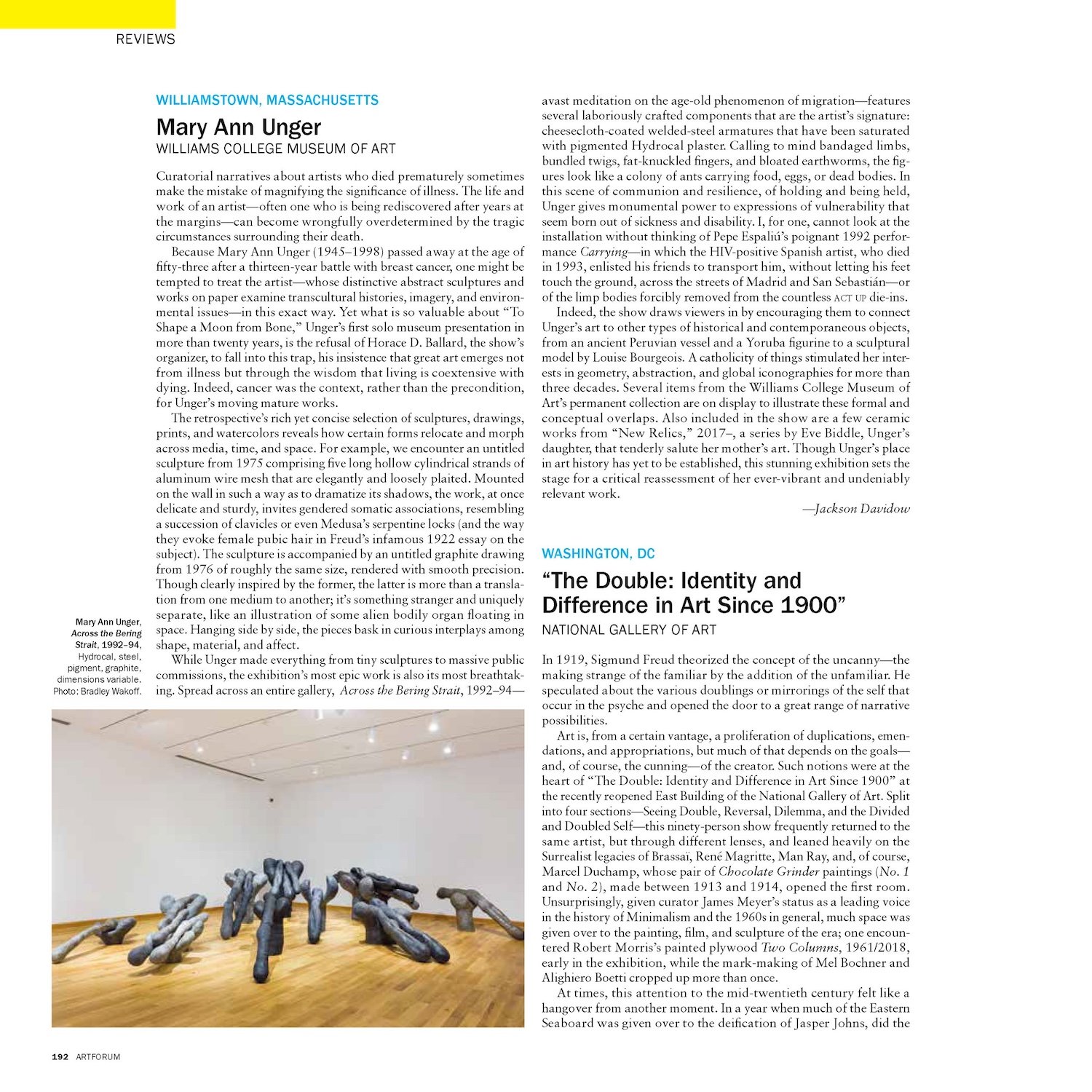
The artist's review in Artforum by Jackson Davidow
“Unger’s intertwined roles as mother, activist, and curator, as well as artist,” she writes, “foreshadowed those of today’s cultural workers, who often juggle organizing, administration, and educational work in addition to art-making.”
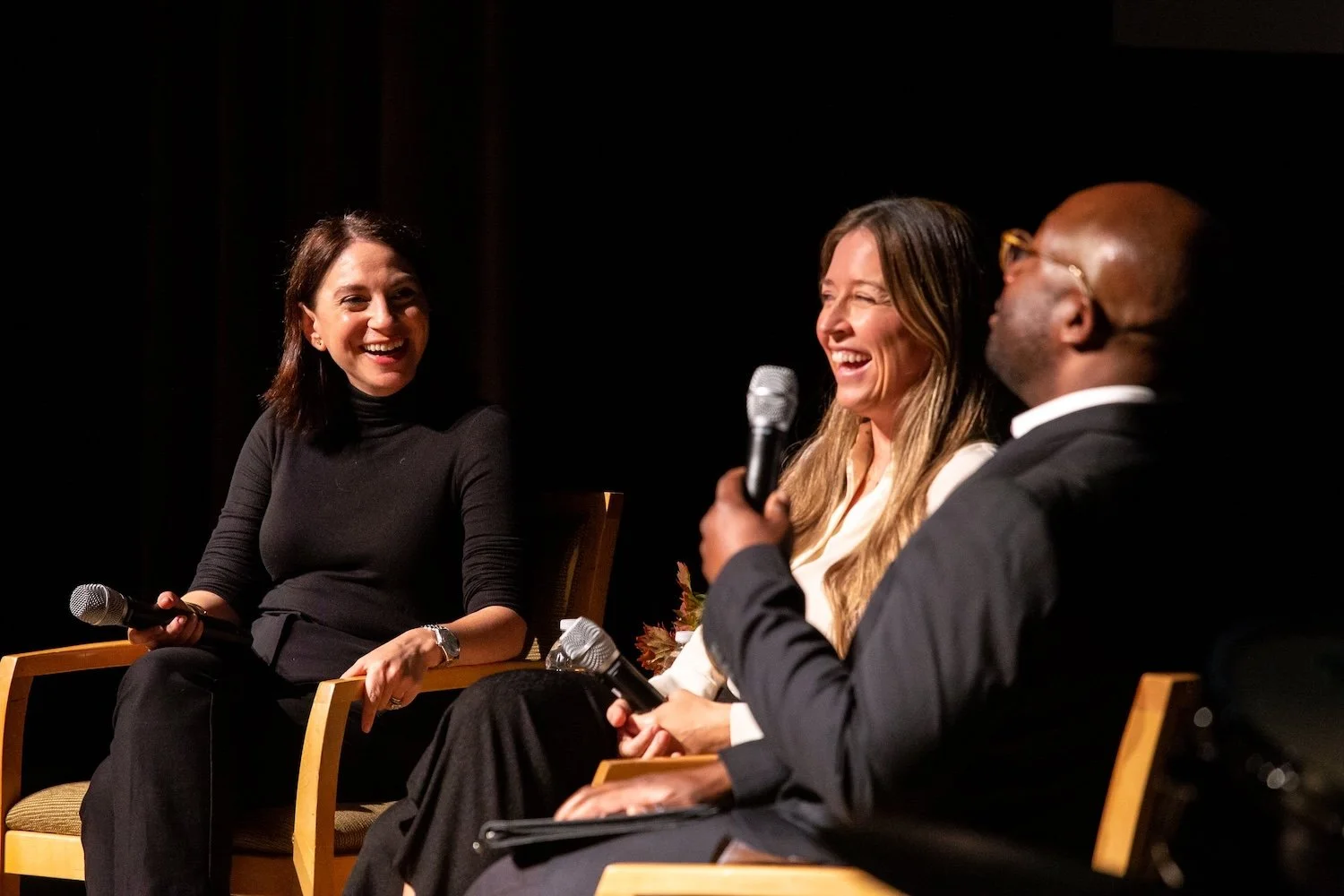
(Right to left) Ballard; Leigh Arnold, Associate Curator at Nasher Sculpture Center; and Molly Epstein, Senior Partner Goodman Taft gathered for a morning panel, “A Dialogue of Feminist Dimensions: Sculpture in an Expanded Field,” with Ballard remarking that “in Mary Ann’s work, when you can walk into them…the human becomes the heart, the human becomes the muscle.” Courtesy Williams College Museum of Art
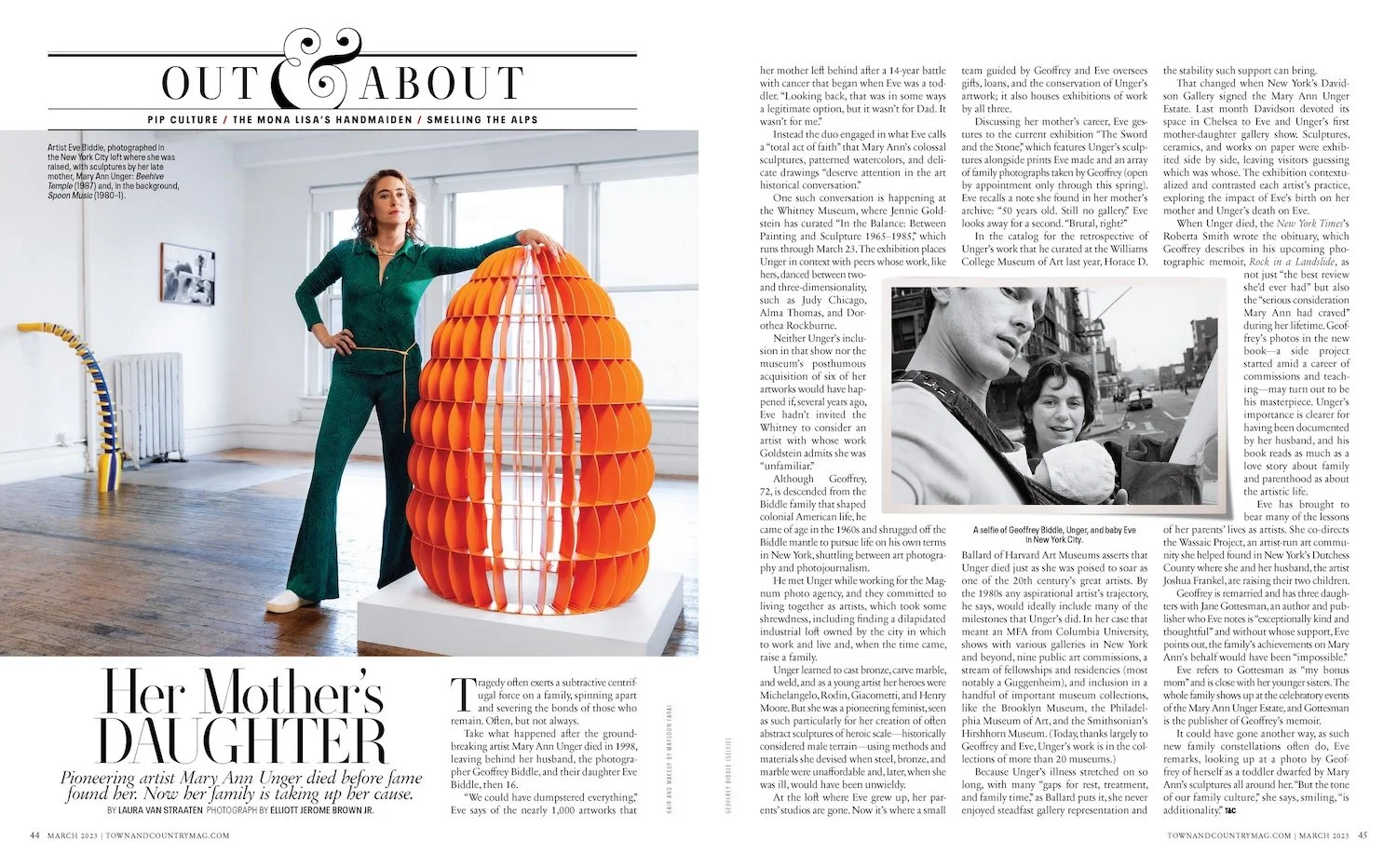
An exclusive on the artist in Town & Country by Laura van Straaten
For impact, we helped steer a nearly-year-in-the-making feature story offered exclusively to fine art writer Laura van Straaten, who filed the moving “Her Mother’s Daughter” in Town & Country about the artist Eve Biddle’s (b. 1981) efforts to create appreciation for her mother’s work. The touching, layered essay instantly introduced the artist to a broad and international audience, elevating her and her contributions to art and art history and chronicling the arc of loss and healing experienced by Eve and her father, the celebrated photographer Geoffrey Biddle, author of a frank, moving memoir with pictures, Rock in a Landslide (Working Assumptions, 2023). “Unger learned to cast bronze, carve marble, and weld, and as a young artist her heroes were Michelangelo, Rodin, Giacometti, and Henry Moore,” van Straaten writes, “but she was a pioneering feminist, seen as such particularly for her creation of often abstract sculptures of heroic scale—historically considered male terrain—using methods and materials she devised when steel, bronze, and marble were unaffordable and, later, when she was ill, would have been unwieldy.”
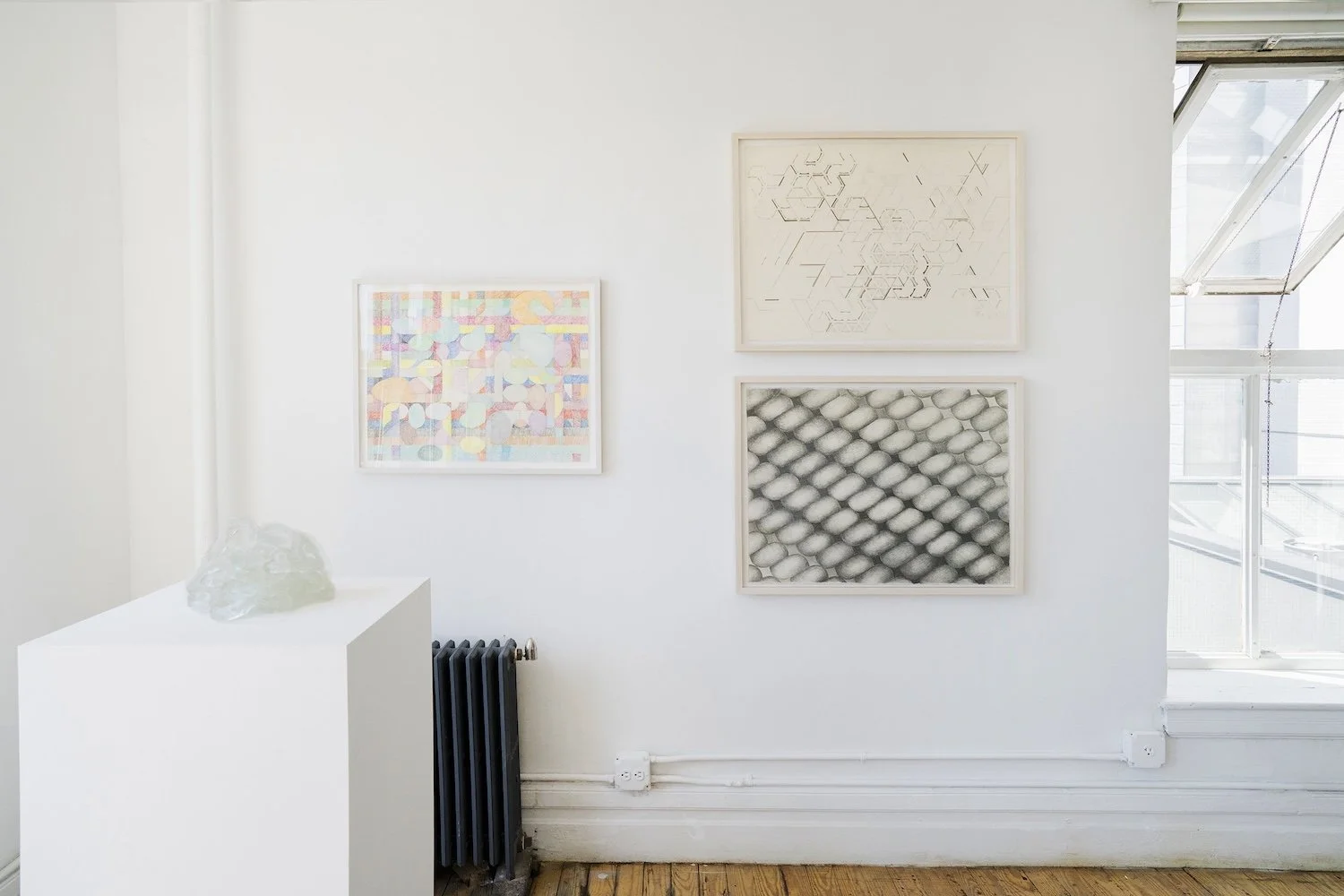
Installation view of Eve Biddle | Mary Ann Unger: Generation, Photo: Ryan Speth. Courtesy The Mary Ann Unger Estate
In 2023, we recommended an encore presentation of Eve Biddle / Mary Ann Unger: Generation and, uniquely, in a domestic, site-specific format in the artists’ former loft where both artists lived and worked that would allow the estate to invite the public to view the material over the course of several months and to hold public programs and exclusive special events. We carefully prepared an announcement with great attention paid to the language used to position and articulate the studio practices and bodies of work of both artists—“Benchmarks (1977), a group of knuckled, tubular sculptures in bonded iron shows Unger working in an expressive mode and at scale; and a tendency for parts of load bearing works to rest against, hold, support, carry, or cradle one another…nearby, a trio of early drawings include a bright, buoyant 1974 geometric work in colored pencil alongside a pair of stacked 1978 monochromatic sheets that demonstrate her interest in systems, patterning, and formulas,” for example—and arranged visits to the loft by critics to Artforum, Art in America, Sculpture, and The New York Times. A special viewing and interview was organized for Leah Triplett Harrington, resulting in a second, expansive essay and lyrical review by the critic and curator: “A Mother and Daughter Find Each Other in Art: Mary Ann Unger worked against the idea of the solitary (male) genius, creating a model of life and work that empowers artists like her daughter, Eve Biddle.”
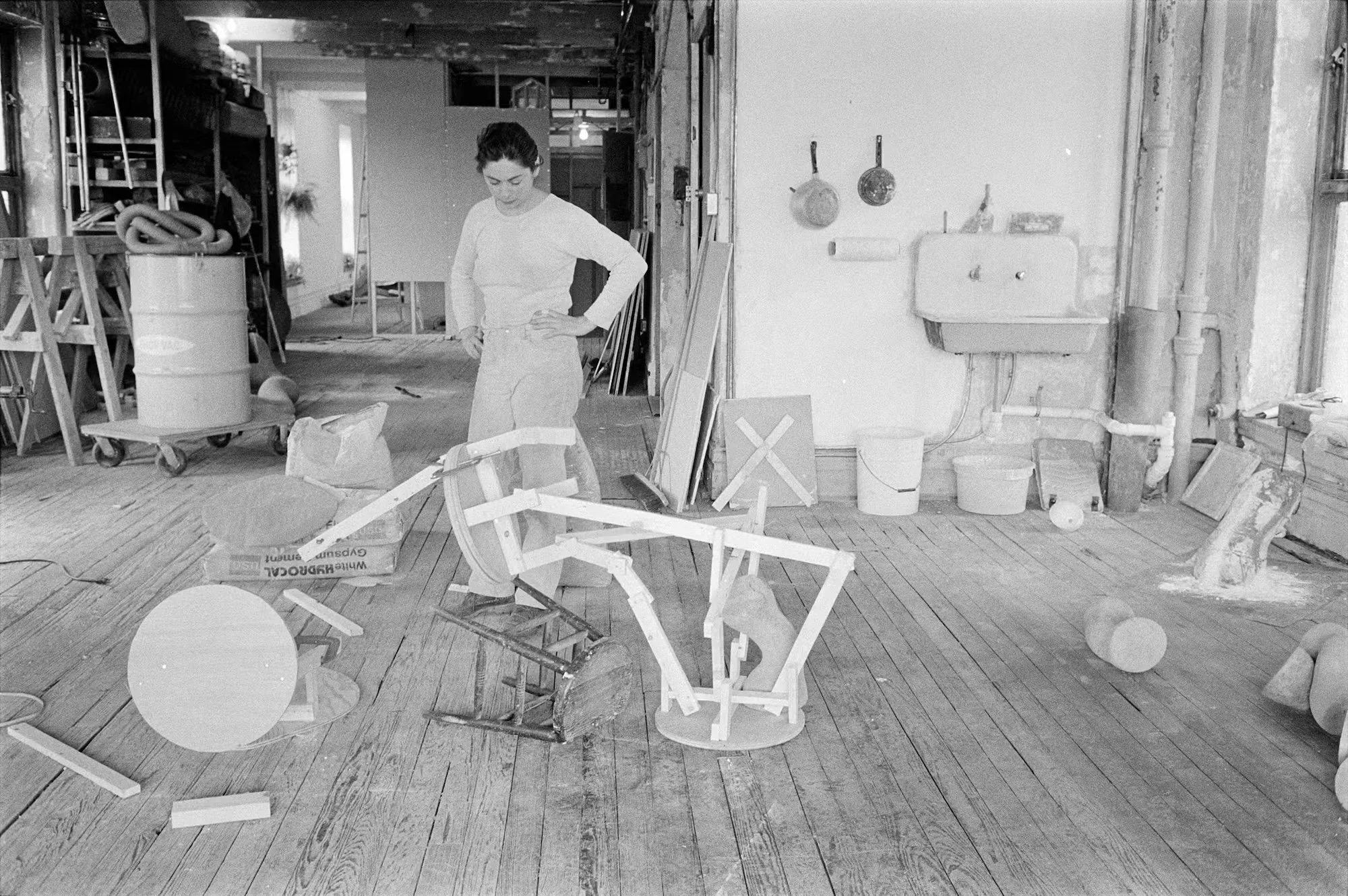
Mary Ann Unger at her East Village Loft, New York, NY, 1976, Photograph by Geoffrey Biddle
In 2024, on the occasion of a dazzling installation of Eve Biddle’s sleek, lustrous, mysterious ceramics alongside a 1994 sculpture by Unger that the museum had recently acquired as part of Craft Front and Center; Conversation Pieces at the Museum of Art and Design organized by Alexandra Schwartz, Curator of Modern and Contemporary Art, Craft, and Design, we arranged an exclusive by Grace Edquist in Vogue. “The relationship between Unger and Biddle, both as mother-daughter and as artists of different generations, underscores the show’s ethos. Biddle’s 20 abstract works of ceramic and glass, a mix of circular portals and rib-like forms, hang in a cluster directly next to her mother’s 1994 terra-cotta sculpture Hoist,” Edquist writes. “Preceding Unger’s piece is a series of vases that transition from the more functional—Marguerite Wildenhain’s 1966 stoneware crock—to Peter Voulkos’s Sibley, a wonderfully misshapen vessel from 1992. (As it happens, Unger studied under Voulkos.)”
More recently, we were asked by the estate to assist in positioning a museum-level survey at Berry Campbell—the first presentation in New York City of the artist’s massive, epically scaled Across the Bering Strait (1992–94) in its entirety. Working closely with the estate, gallery, and Sutton, the public relations firm, we served in a specialized, additive role with a focus on scholarship and public programming. We assisted with the preparation of the announcement and recommended and arranged an accompanying essay by curator, writer, and art historian Glenn Adamson. And we conceptualized an historically accurate recreation of the stylized lighting Unger used to animate her hulking magnum opus that served to activate the exhibition.
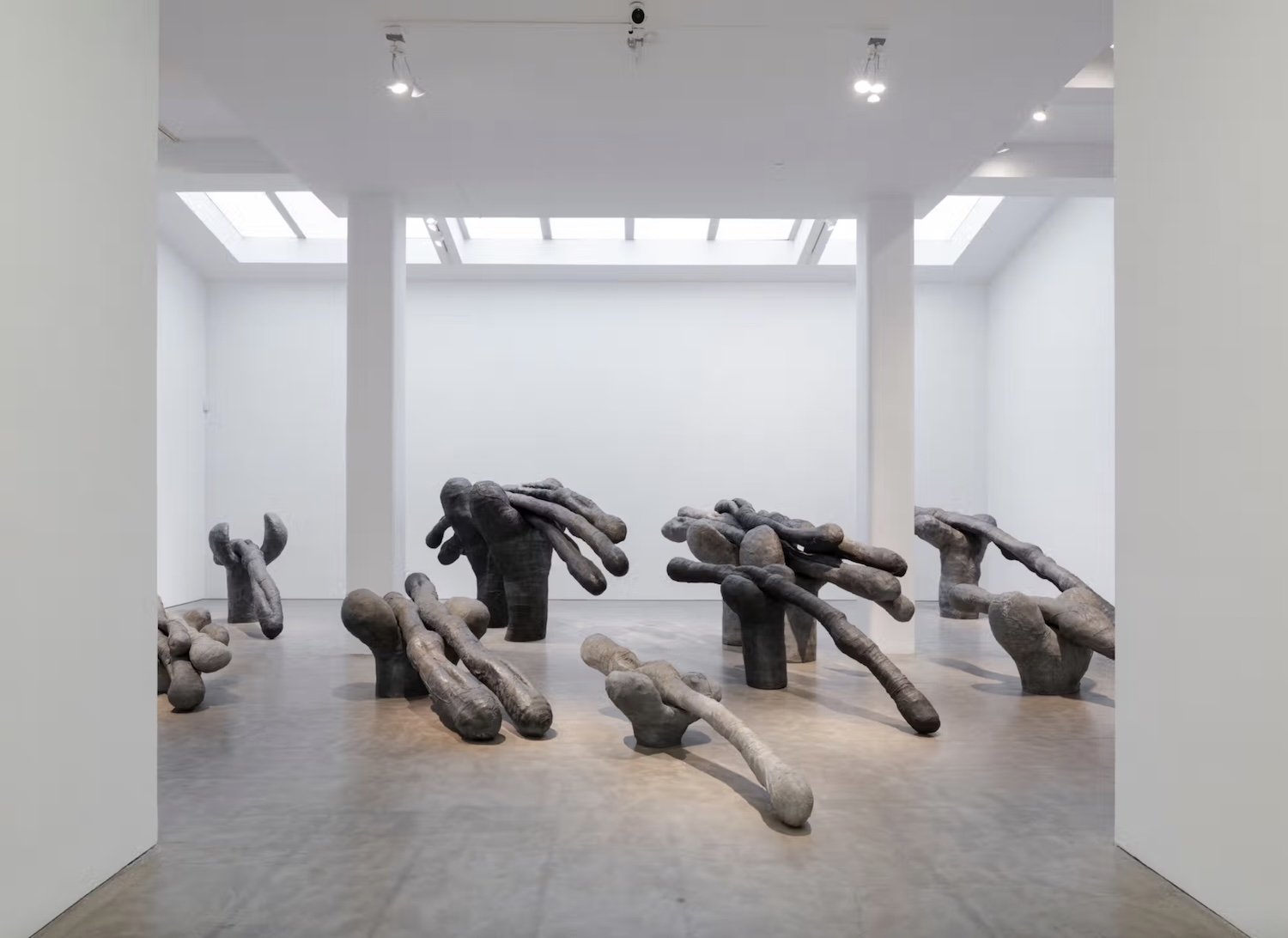
Mary Ann Unger: Across the Bering Strait, Berry Campbell, New York, NY, 2025
SPECIALISTS
- Scholarship
- Glenn Adamson