
Richard Diebenkorn Foundation
CASE STUDY
Since 2016 we have enjoyed an ongoing, close partnership with the Richard Diebenkorn Foundation, helping to verbally and visually define the organization, which works to increase public access to the artist’s work and legacy. We provide fully integrated strategic advice, guidance, creative direction, and content.
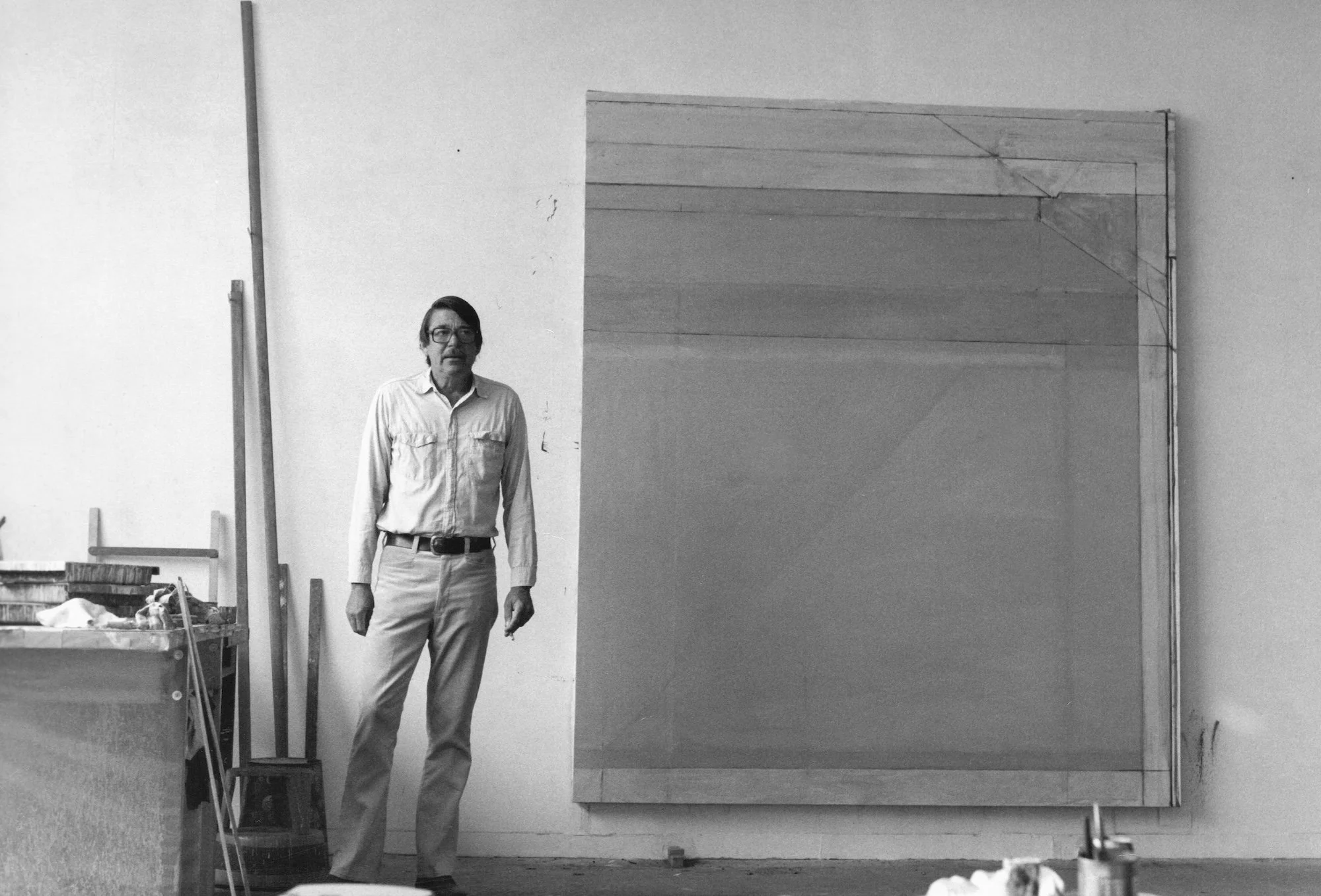
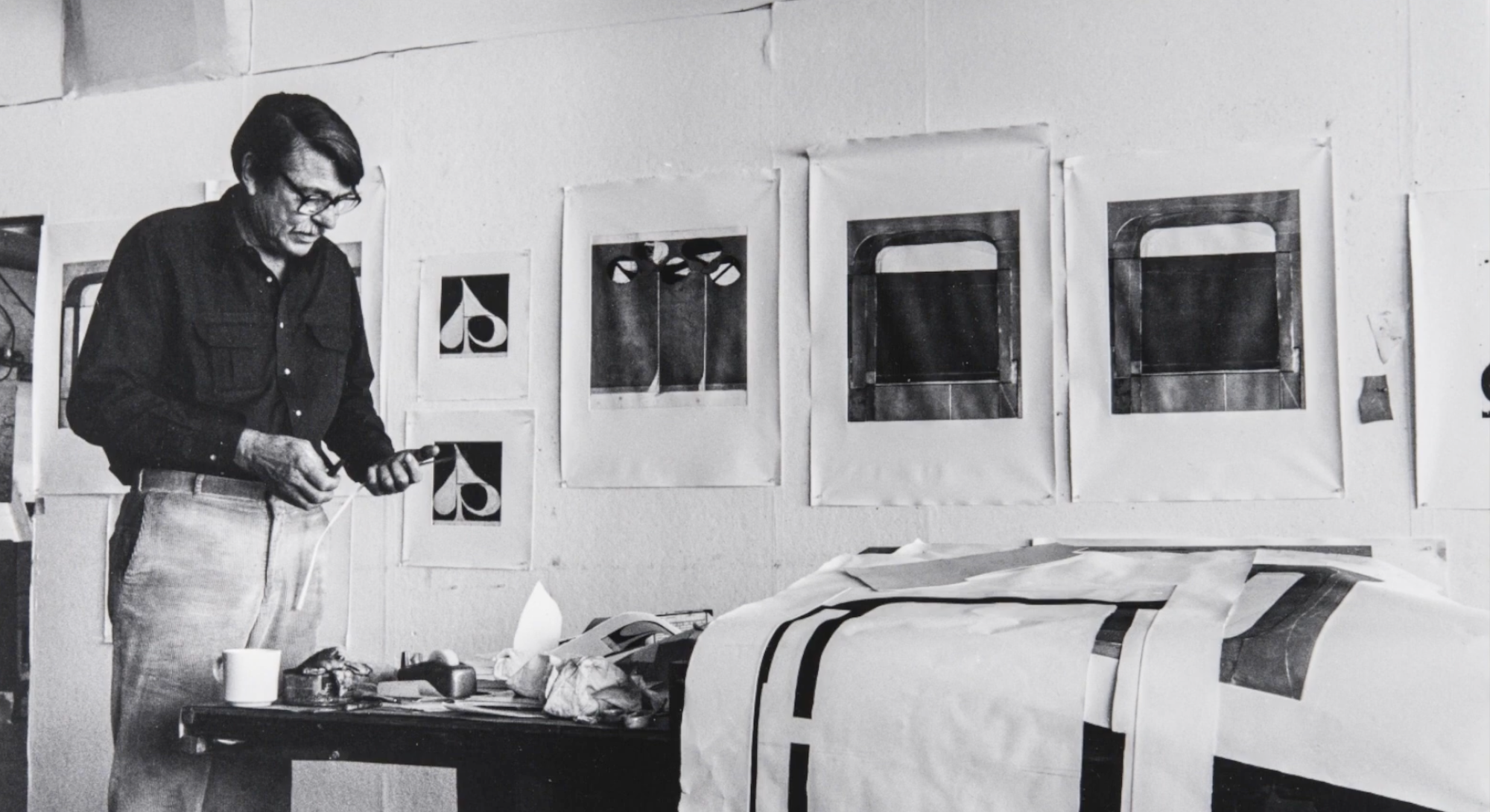
Richard Diebenkorn in his Ocean Park studio, Santa Monica, CA, 1984, Photograph by Leo Holub, Courtesy of Richard Diebenkorn Foundation
In 2016, in anticipation of Richard Diebenkorn: The Catalogue Raisonné (Yale University Press, 2016), a four-volume 2,000 page definitive resource, containing more than 5,000 of the artist’s unique works, including sketches, drawings, paintings, and sculptural objects, we executed a comprehensive legacy and brand program. We constructed a handsome and sturdy brand and visual identity system for the Foundation that instantly elevated the professional correspondence of the executive director and managing director to museums, institutions, and galleries. And as a free and ever-expanding resource alongside the new publication, we designed and launched the first phase of an all new diebenkorn.org.
To engage with the field, we executed a public relations/public engagement program that included special events and scholarly remarks and presentations in San Francisco and New York together with art historians, curators, collectors, and aficionados, featuring the new brand in print, motion graphics, and invitations, as well as signature editorial placements. As an example, we were delighted to arrange a high profile excerpt in ARTnews by Jane Livingston—who co-edited the volumes—in which she remarks on artist’s epic Ocean Park cycle and his “command of spatial complexity in an abstract matrix—gleaned in large part from his years of painting interiors, peopled or not, tabletop still lifes, landscapes literally observed and partially imagined, and figures in almost unimaginable number.”
Also in 2016, we promoted Matisse/Diebenkorn (2016–2017), working alongside curatorial, communications, and public engagement departments at the Baltimore Museum of Art and San Francisco Museum of Modern Art to assist with communications, media relations, digital, social, and public programs.
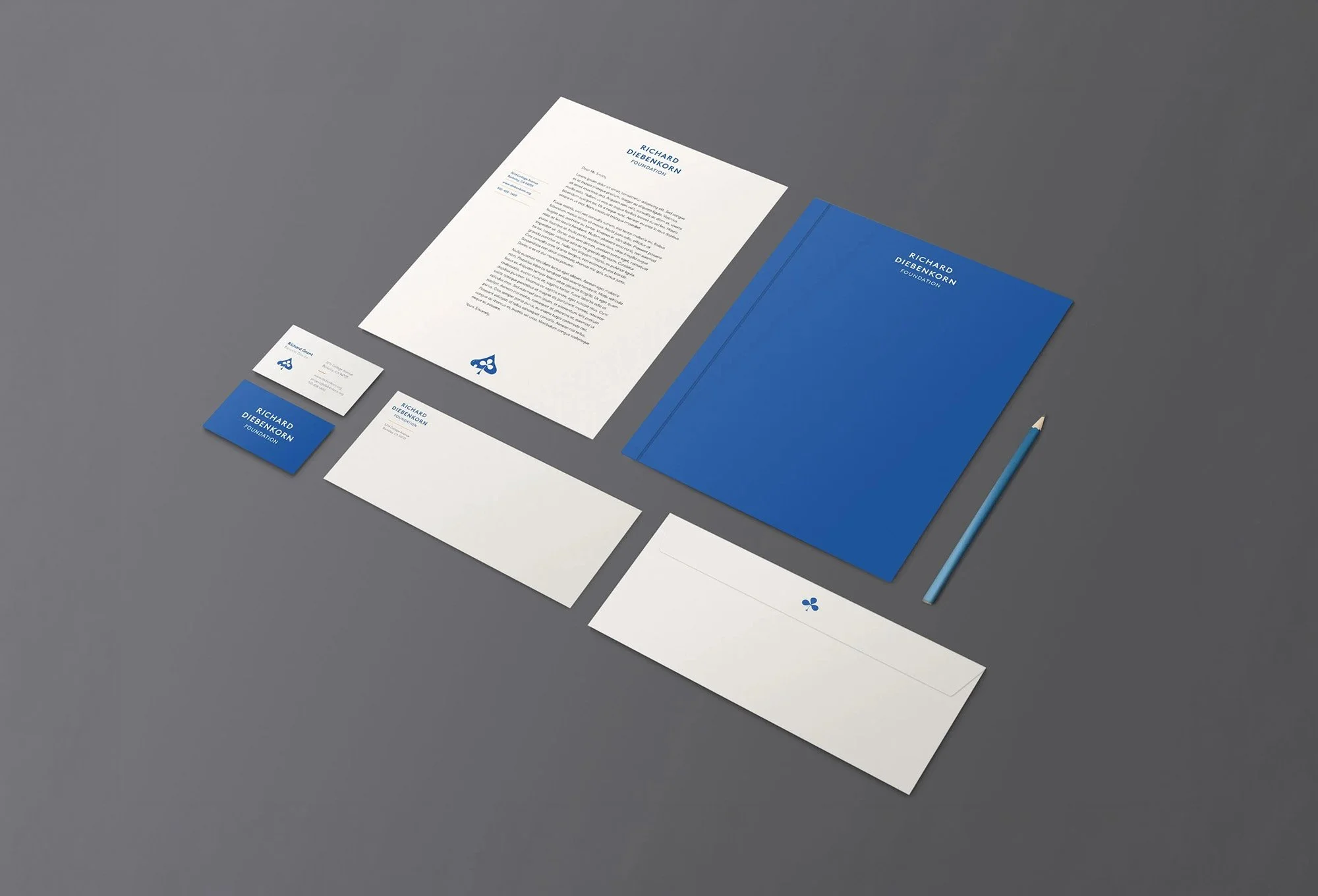
A visual identity system by Portrait
In 2017, to support ongoing awareness around the catalogue raisonné, we scripted, directed, and produced a film by filmmaker Matthew Pendergast that featured Livingston and Andrea Liguori, co-editor of the volumes and Executive Director of the Richard Diebenkorn Foundation. Around this time, we were invited by the leadership of the Foundation to assist with a strategic planning process. This included a research phase of the artist-endowed foundation field and execution of a strategic planning curriculum with the board and staff. A final plan document with an emphasis on education was drafted and approved and continues to be implemented across the Foundation.
And we subsequently assisted with a strategy to announce and promote Richard Diebenkorn: Beginnings, 1942–1955, organized by the Foundation in conjunction with the Crocker Art Museum in Sacramento, CA. The traveling exhibition was the first to solely examine the work Diebenkorn made prior to his switch to figuration and focused on the artist’s stylistic and technical origins in oil, watercolor, gouache, ink, crayon, and collage. We worked closely with Crocker Art Museum Associate Director and Chief Curator Scott A. Shields to counter the prevailing notion that Diebenkorn began his career as a painter in the Abstract Expressionist style.
“Though his evolution was rapid, he did not suddenly arrive on the scene as an Abstract Expressionist prodigy,” asserted Shields. “He investigated many styles and ideas to get there.”
A video by Matthew Pendergast
In 2019, we released a gorgeously illustrated color monograph on the artist, Richard Diebenkorn: A Retrospective (Rizzoli), with a celebratory gathering at Van Doren Waxter, New York with the daughter of the artist, Gretchen Diebenkorn Grant, and art historian Sasha Nicholas, who offered a fresh and youthful perspective on the artist and the geographies where he chose to paint. A luminous, fresh mix of work from all periods and styles and a visually striking object measuring nearly 10 by 12 inches, the book includes a handsome slipcase box and features 340 illustrations in new color photography. Remarking on the project with Rizzoli, Steve Nash, a preeminent authority on the artist and former President of the Richard Diebenkorn Foundation, added at the time that “writers on Diebenkorn have often struggled with the question of how he fits into the postwar history of American art.” But, as a nod to the next generation, “in our current age of artistic pluralism and multiculturalism, we have come to understand that ‘fitting in’ is much less important than the quality and depth of individual creativity. It is within this broadened historical perspective that Diebenkorn’s work over recent decades has become more fully recognized and appreciated.” The monograph is now in its second printing.
During the production of the monograph, the Foundation’s Head of Archives discovered that the painting used to illustrate the cover, a 1978 acrylic, was made in France, not in the artist’s home of California; and that an extended stay in the South of France that year resulted in a total of six works. We worked closely with her to produce a stand-alone essay, “France, 1978,” for the diebenkorn.org digital channel, From the Basement. For impact, and to reach the widest audiences possible, we then pitched the scholarship to the essayist Amy Beth Wright, who subsequently filed “Pieces of Ocean Park” in New Criterion.
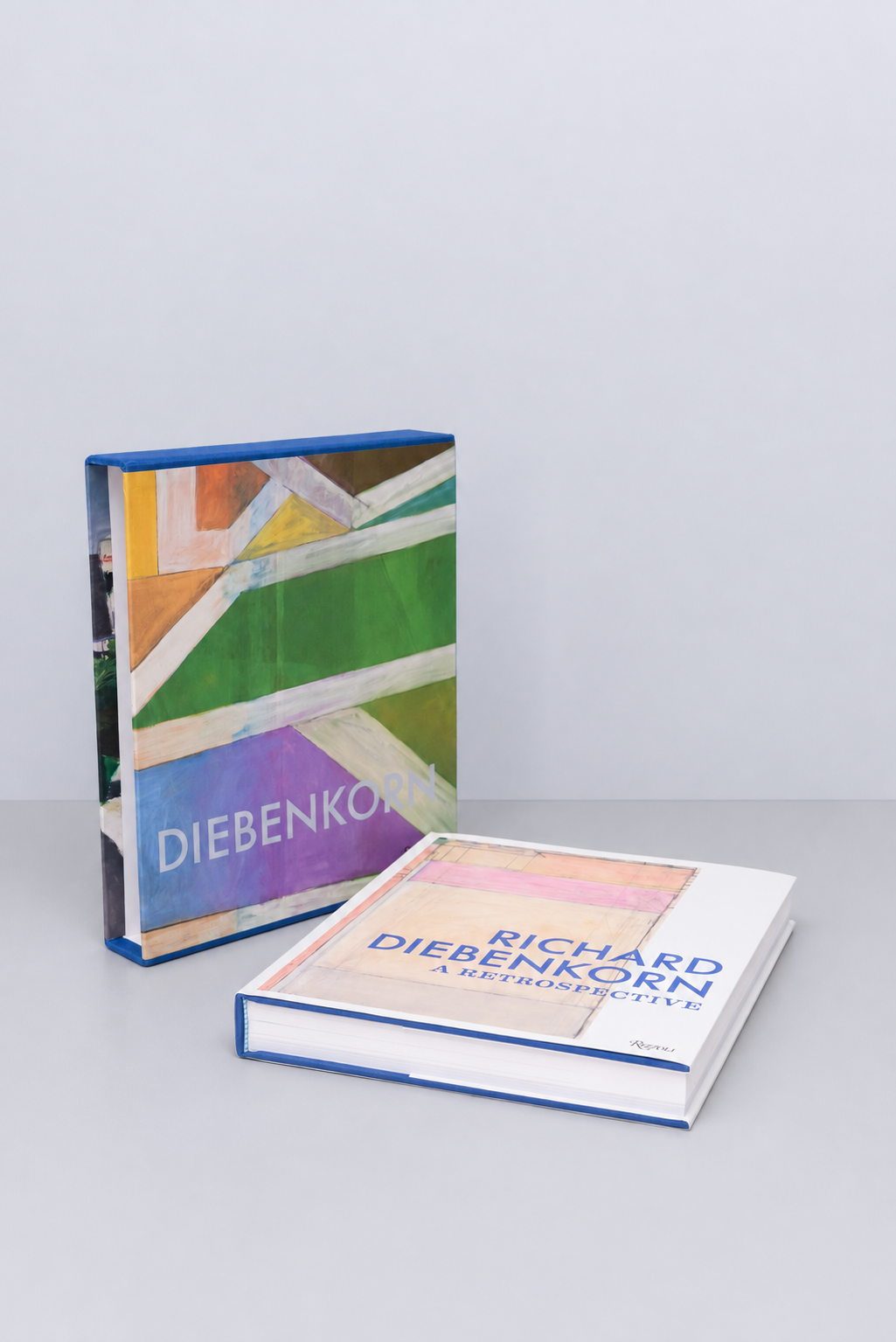
Richard Diebenkorn: A Retrospective (Rizzoli, 2019), Photograph by Madison Voelkel
DIEBENKORN.ORG
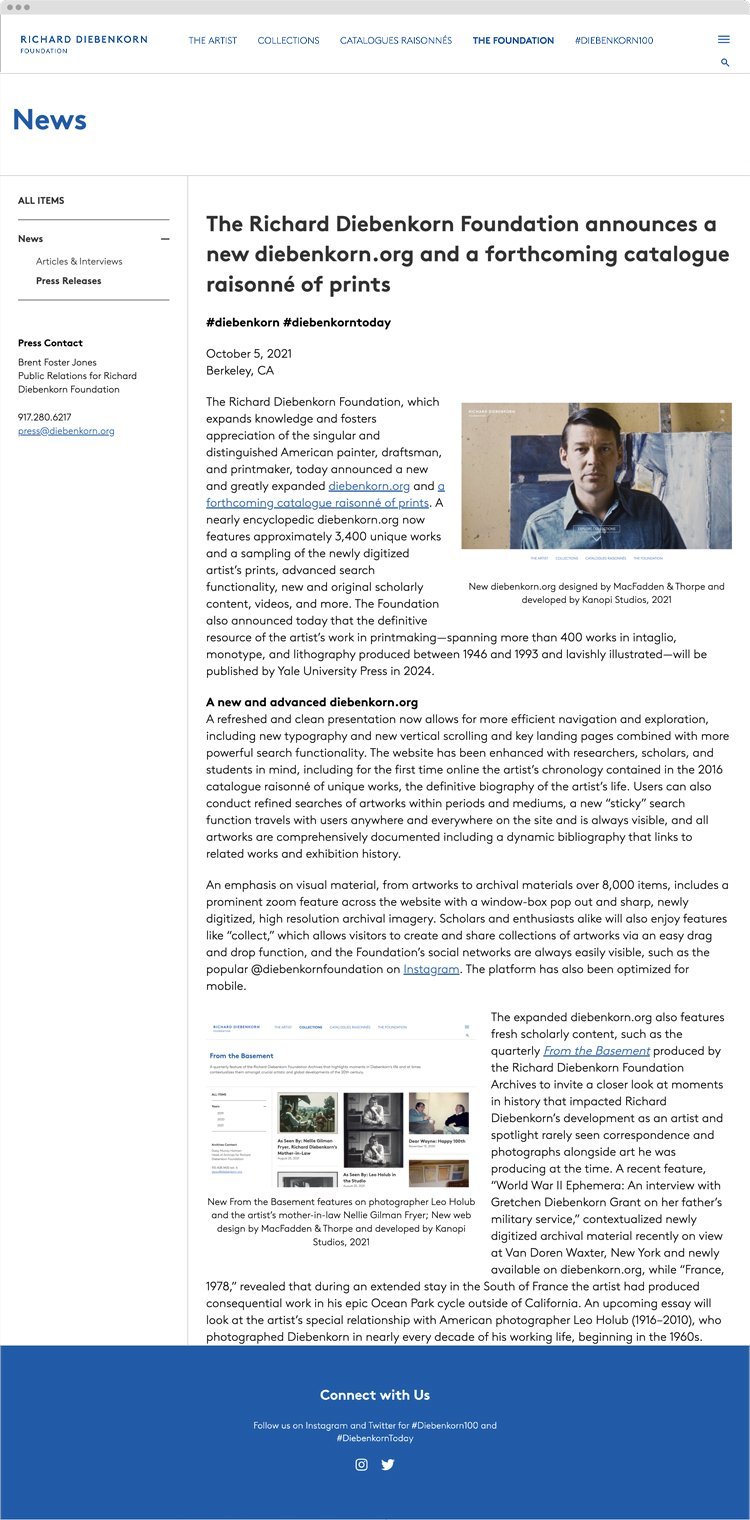
In 2021, we developed an encyclopedic diebenkorn.org, featuring approximately 5,000 unique works and a sampling of the newly photographed artist’s prints, advanced search functionality, new and original scholarly content, and videos. Users can now conduct refined searches of artworks within periods and mediums, a “sticky” search function travels with users on the site and is always visible, and all artworks are exhaustively documented. The expanded platform emphasizes visual material, from artworks to archival materials of over 8,000 items, and includes a prominent zoom tool across the website with sharp, newly digitized, high resolution archival imagery.
The expanded diebenkorn.org also features fresh scholarly content, including the ongoing From the Basement, which invites a closer look at moments in history that impacted Richard Diebenkorn’s development as an artist and spotlights rarely seen correspondence and photographs alongside art he was producing at the time. In a 2024 essay, “An artist studio by Club Triangle,” Katharine James, then the Foundation’s Head of Digital and Public Engagement, unpacks the rich history of an Oakland-Berkeley building once a speakeasy during prohibition years and later the site of a destructive fire. “For a brief period in the history of Club Triangle, Richard Diebenkorn painted next door to the comings and goings of the neighborhood,” writes James. “He enjoyed going somewhere to make his art. He enjoyed the activity of regulars stopping into the bar. He liked frequenting local shops and storefronts and looking at the facades of old buildings. He liked the history and age of spaces.” As a way to increase engagement with the local community, @DiebenkornFoundation, @OaklandMuseumCA, and @EastBay_Yesterday produced a special Instagram collab reel releasing the essay.
A dedicated newsroom/content feed showcases interviews, features, and announcements reported in a consistent institutional voice, style, and syntax that we have developed over time for the Foundation and applied across platforms. During #Diebenkorn100, diebenkorn.org served as the destination for the artist’s centennial, featuring new scholarship researched by the Foundation exclusively for the 100th, a continually updating stream of museum installations, videos, and more on a special page dedicated to the festivities.
A #Diebenkorn100 video, filmed by 32k Productions
#DIEBENKORN100
Our offices assisted with the planning and execution of #Diebenkorn100, providing a combination of advice and guidance, outreach, and creative. The celebratory year included museum installations, exhibitions, digital events, fresh insights; rarely seen archival photography and correspondence; and new videos, bringing the artist’s work to front doors, screens, galleries, and museums. As the centerpiece of #Diebenkorn100, we worked systematically for nearly two years alongside the Foundation to invite and enlist museums to participate by installing work made by the artist from their collections and sharing photographs, videos, and exclusive reflections by curators in their institutional social channels so that anyone, anywhere, could engage with the artist’s work and festivities. As such, we prepared guidelines for contributing curators and detailed instructions for communications and social media desks at museums. We also supported the Foundation’s efforts to encourage the public to share in social sightings of Richard Diebenkorn’s work on view, using the hashtag #Diebenkorn100.
Strategically, we felt it was crucial that the artist be on view in the Northeast, Midwest, the South, and Texas—in New York City, for example, at the Museum of Modern Art, visitors were treated to a special #Diebenkorn100 installation of the more than eight-foot-tall vertical Ocean Park #115 (1979) outside the museum’s fourth floor collection galleries—but especially in California, where he lived and worked.
We were delighted that in the San Francisco Bay Area, every major institution agreed to participate in #Diebenkorn100 by placing work on view in their galleries and online, including the Anderson Collection at Stanford University, the Cantor Arts Center, the Crocker Art Museum, the Fine Arts Museums of San Francisco, the Oakland Museum of California, the San Francisco Art Institute, the San Francisco Museum of Modern Art, the San José Museum of Art, and the University of California, Berkeley Art Museum and Pacific Film Archive. At the San Francisco Museum of Modern Art, the iconic Cityscape #1 (1963) was on view and the 1955 oil on canvas Still Life with Orange Peel (1955) was specially installed; and @SFMOMA and @DiebenkornFoundation came together for a #Diebenkorn100 collab post—SFMOMA’s first collab on Instagram. At the de Young Museum, where the sweeping Seawall (1957) was accompanied by a 1979 oil and a 1953 Abstract Expressionist canvas, Emma Acker, Associate Curator of American Art, said of the work in a delightful, buoyant reel on @deYoungMuseum.” The Fine Arts Museums of San Francisco showcased works throughout the entire month of April on Instagram and with a fresh interpretation in a special #Diebenkorn100 wall text by Timothy Anglin Burgard, Distinguished Senior Curator and Curator-in-Charge of American Art.
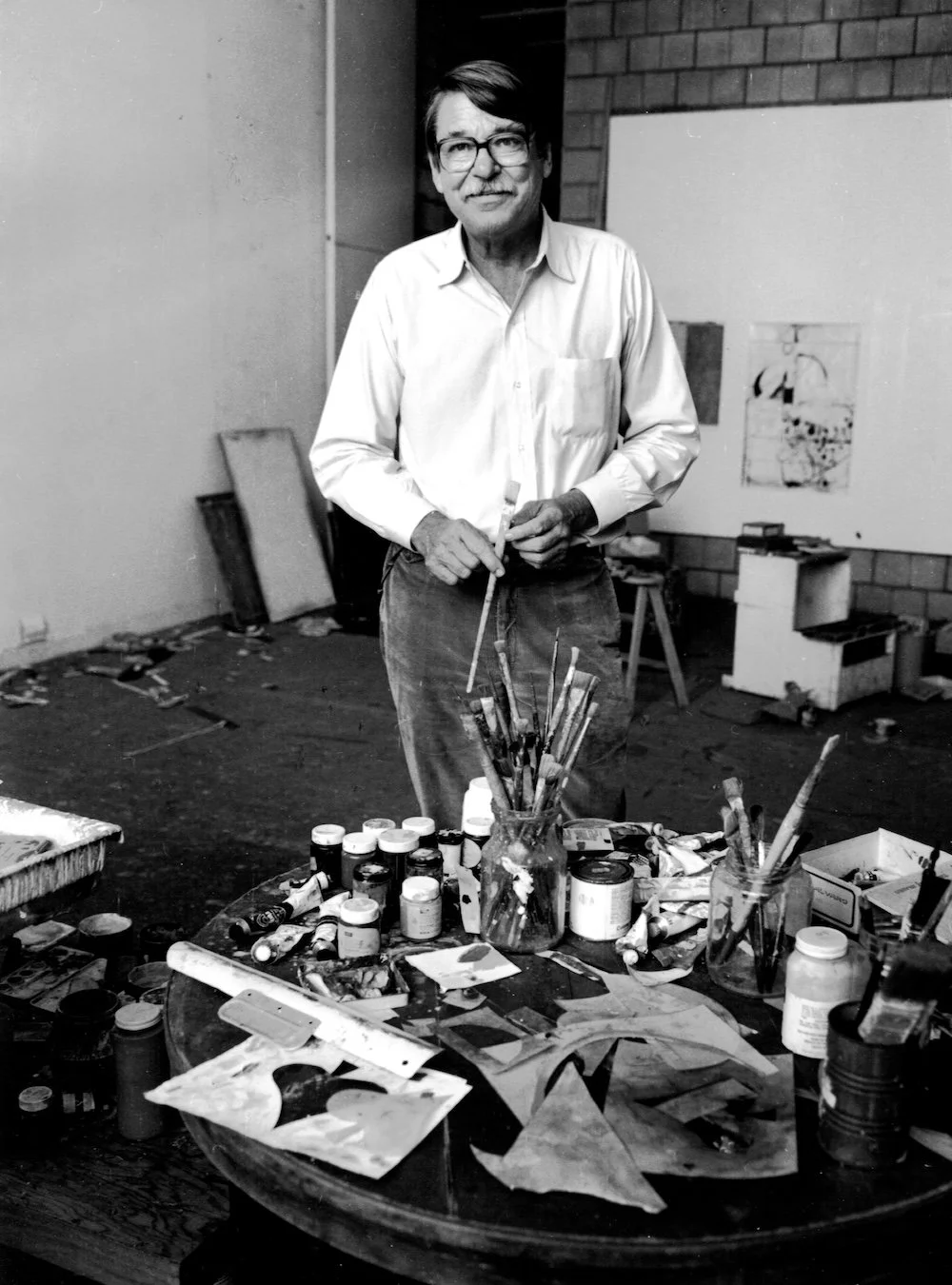
Richard Diebenkorn in his Ocean Park studio, Santa Monica, CA, 1984, Photograph by Leo Holub, Courtesy of Richard Diebenkorn Foundation
A special #Diebenkorn100 essay by Amadour
A special #Diebenkorn100 essay by Charity Coleman who unearthed the artist’s 1988 CBS Sunday Morning News
The nearby Oakland Museum of California participated in #Diebenkorn100 by drawing attention to its holdings of the artist, such as the sensuous Seated Nude-Arm on Knee (1962), and an unexpectedly tender and humorous reminisce was recorded and posted as a reel—now at more than 47,000 views and still climbing—on @OaklandMuseumCA by Carin Adams, Curator of Art. Seated below a poster reproduction of the artist’s Untitled (1975) hanging in her office, she confessed that as a young person growing up in Northern California, “Diebenkorn really defined the way that California light and land occupied my brain.” She laughed, “you know as a high school student in the mid 80s, [I] had this poster in my room.” It “didn’t occur to me until I had been in my role for quite a while…I saw this poster and was like… oh my god.” At the Anderson Collection at Stanford University, the Foundation added to a group of key oil paintings on view at the time—such as Berkeley #26 (1954), made a year prior to Diebenkorn’s decisive shift from abstraction to representation—with a special loan of four Ocean Park drawings and a 1984 Leo Holub portrait of the artist in his Ocean Park studio. In response, the Foundation added to the installation by loaning a work made during the artist’s time at Stanford, and then Director Jason Linetzky invited students to produce specially created interpretive texts. And at the Crocker in Sacramento, the museum celebrated with a public unveiling of the artist’s #2 (Sausalito) (1949), a new acquisition, with remarks by Associate Director and Chief Curator Scott A. Shields.
Elsewhere, we arranged a festive outdoor Instagram live conversation on the first day of summer in the sculpture garden of the Norton Simon Museum in Pasadena, California, between Emily Talbot, Chief Curator of the Norton Simon Museum, a specialist in 19th-and-20th-century European art, and Katharine James. And at the Museum of Contemporary Art, Los Angeles, a special birthday post on @MOCA highlighted the museum’s holdings of the artist’s work spanning paintings to works on paper.
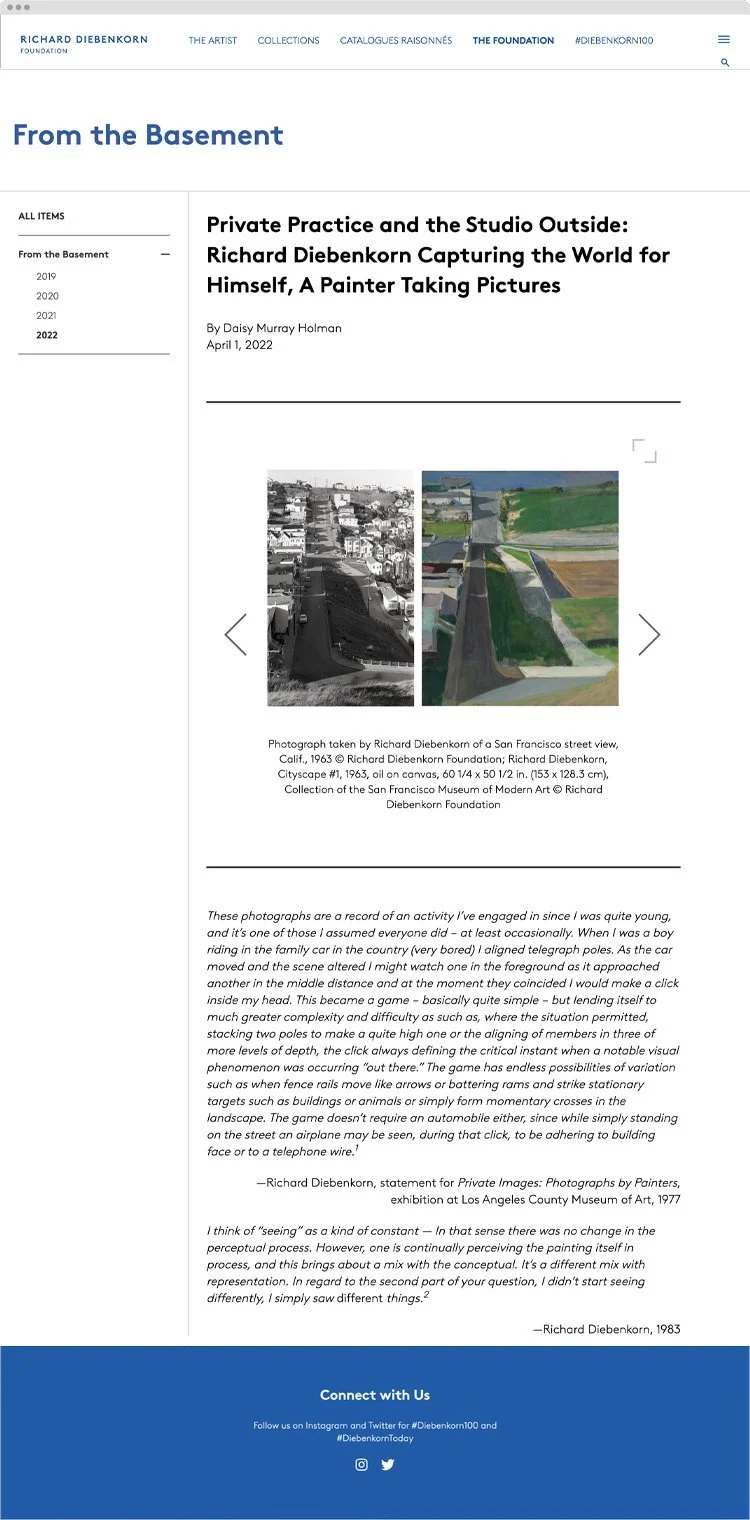
At the inception of the centennial, we encouraged the Foundation to develop new scholarship, resulting in the essay, “Private Practice and the Studio Outside: Richard Diebenkorn Capturing the World for Himself, A Painter Taking Pictures,” by Daisy Murray Holman, former Head of Archives at the Foundation and the daughter of the late Elizabeth Murray. Janet Bishop, Thomas Weisel Family Chief Curator and Curator of Painting and Sculpture at SFMOMA, wrote a touching, personal reflection on the museum’s Instagram channel in response to the new, significant research.
To further maximize her groundbreaking essay around the artist’s use of cameras, and on the occasion of the retrospective Richard Diebenkorn: Works on Paper 1946–1992 at Van Doren Waxter in New York during #Diebenkorn100, we produced and promoted an intimate conversation in the artist’s former studio in Healdsburg. The conversation took place in front of a window depicted by the artist in a 1988 charcoal drawing. Remarking on the rarely seen photographs embedded in the new essay, especially the artist’s travel photographs—a 1978 photograph taken in France and a 1979 snapshot from a trip to Venezuela—Gretchen Diebenkorn Grant confessed she “never saw” many of these “private photographs, somehow…they were not shared. But,” she added, “they are so him. They are so the way he sees.” Art critic Johanna Fateman, writing in The New Yorker, remarked of the 1988 drawing—and a vitrine which we were thrilled to help to conceptualize with the gallery—“Whether a Diebenkorn piece is abstract or figurative, black-and-white or in color, geometric or gestural, it is always an etheric-architectural articulation of space, a fact that is underscored here by the installation of an untitled charcoal drawing, dated 1988–92, between a pair of arched windows. The piece depicts clean lines and a play of light in Diebenkorn’s studio in the Sonoma Valley, but his touch renders the interior as if it might dissolve into a landscape glimpsed through an open window at the center of the composition. On the exhibition’s second level, a vitrine is lined with ephemera, including a handwritten ten-point list titled ‘Notes to myself on beginning a painting.’”
We also executed an art-directed #Diebenkorn100 series on @DiebenkornFoundation, featuring new and original commissioned scholarship by diverse visual critics who were given full access to the artist’s archives together with artwork, archival material, found footage, and motion graphics. These essays in miniature contributed by a cadre of contemporary writers exclusively for social surfaced lesser known information about the artist, such as his influence on Asian American painter Bernice Bing. The series debuted with a lyrical, elliptical essay by Charity Coleman, a prose-poet, essayist, and art writer who has written for Artforum and BOMB, who unearthed the artist’s 1988 CBS Sunday Morning News interview to consider how Diebenkorn sometimes struggled to talk about his work in interviews and correspondence.
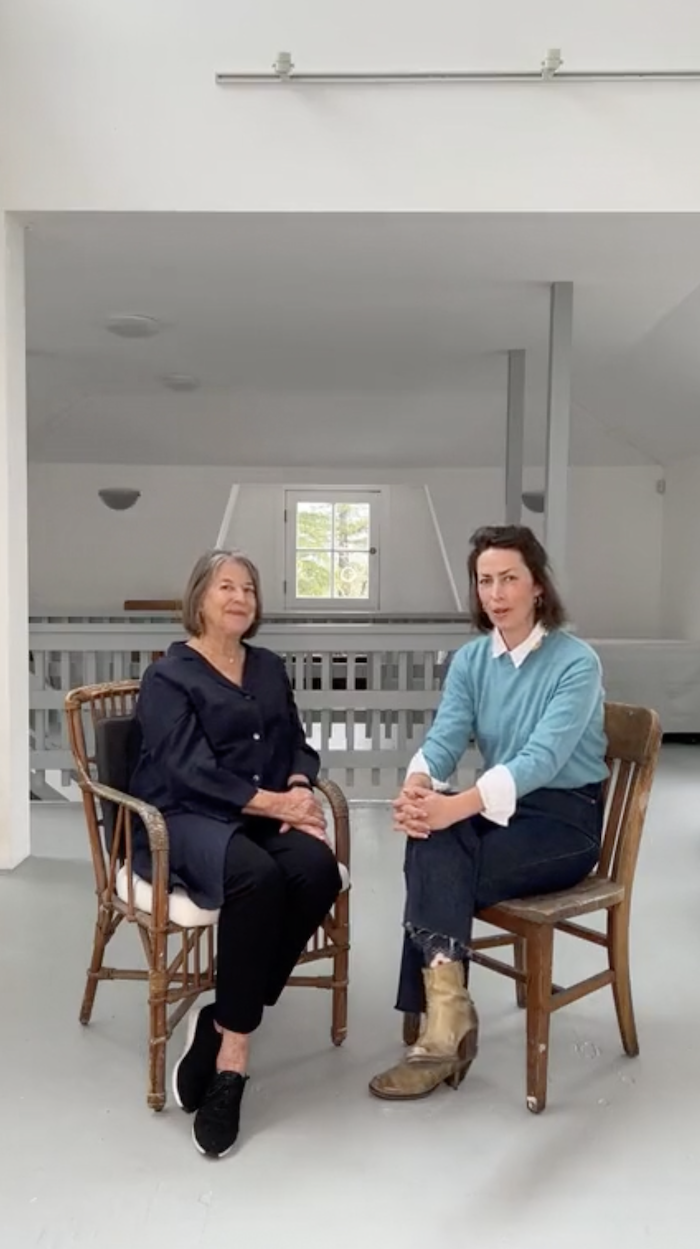
Richard Diebenkorn’s daughter, Gretchen Diebenkorn Grant, and Daisy Murray Holman discuss newly surfaced photographs taken by the artist on occasion of the #Diebenkorn100 exhibition Richard Diebenkorn: Works on Paper 1946–1992
View on Instagram
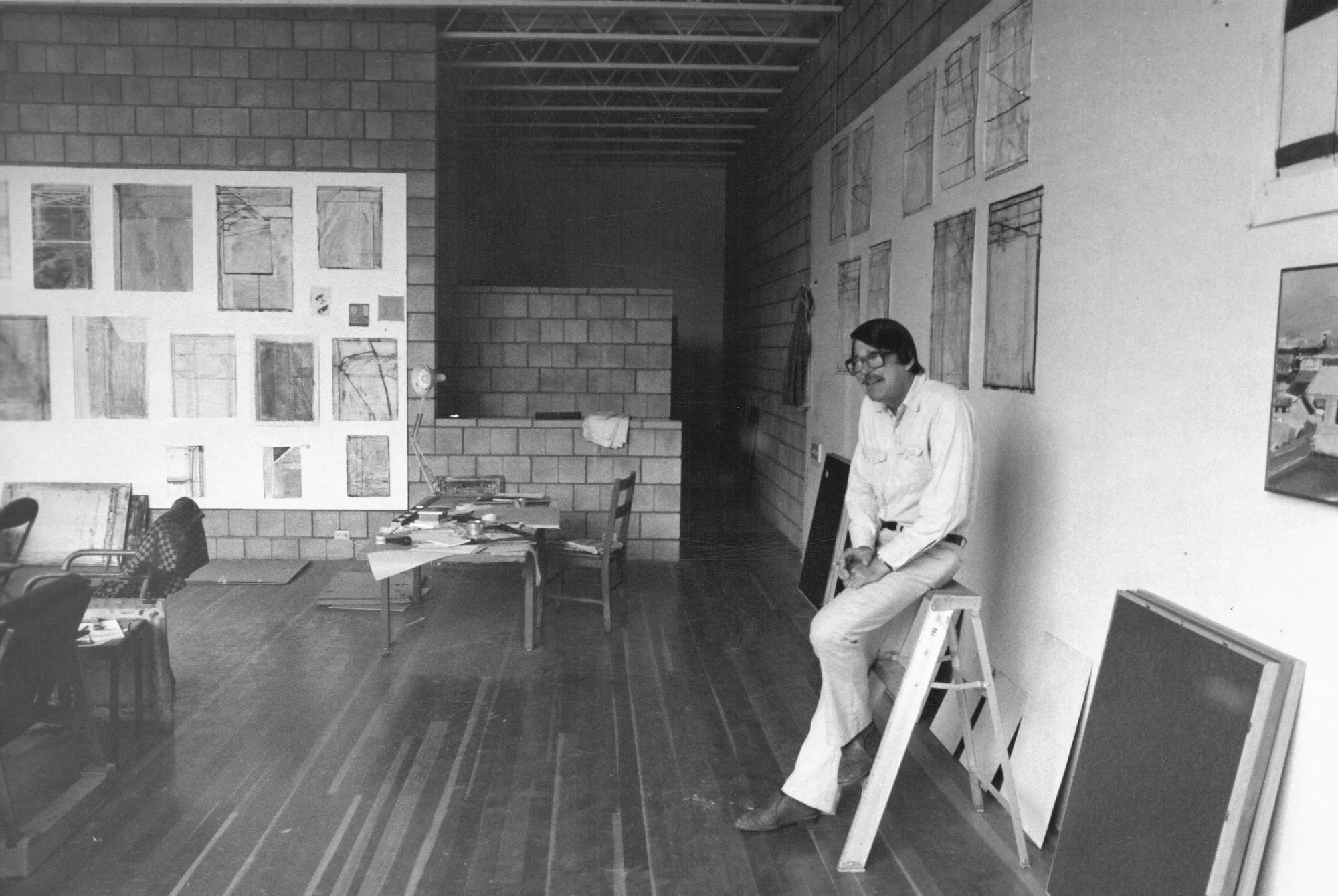
Richard Diebenkorn in his Ocean Park studio, Santa Monica, CA, 1977, Photograph by Larry Berger, Courtesy of Richard Diebenkorn Foundation
SINCE 2022
In 2024, we were delighted to assist the Foundation as it announced the definitive resource of the artist’s work in printmaking—Richard Diebenkorn: The Catalogue Raisonné of Prints (Yale University Press)—a two-volume lavishly illustrated publication edited by Liguori on the artist’s print production spanning more than 400 works in intaglio, monotype, and lithography produced between 1946 and 1993 and lavishly illustrated. A range of activities and integrated communications and brand assistance spanned public relations and public engagement, including media relations and materials development, public programs, and special events, such as a special exhibition at Gemini G.E.L. in Los Angeles inclusive of a special vitrine of rare material that we were delighted to help to conceptualize and realize; as well as the release of never-before-seen video interviews with master printers who worked directly with Diebenkorn over the years in a series of specially designed Instagram reels on @DiebenkornFoundation.
In anticipation of the volumes, we planned and produced a special film again by cinematographer Matthew Pendergast centered on the late Kathan Brown (1935–2025), Founding Director of Crown Point Press, Valerie Wade, Director of the press, and Liguori. They discussed the artist’s rich history with the press and the “golden era” of printmaking in the 1980s. And, in a revelatory and tender moment, they unearthed brightly hued paper scraps discovered during pre-production that the artist had used to construct an iconic print image. In a related short film, we interviewed the late Sidney B. Felsen (1924–2024), Co-founder of Gemini G.E.L., Los Angeles, together with his wife Joni Weyl Felsen, Co-owner of the press, on the artist’s explorations in lithography and his final print project—a series of abstractions he made at his home in Healdsburg, California.
A special film by Matthew Pendergast on the late Kathan Brown (1935–2025), Founding Director of Crown Point Press
View on Instagram
SPECIALISTS
- Scholarship
- Charity Coleman, Amadour, Harley Wong
- Videography
- Matthew Pendergast
- Photography
- Whitney Legge